5 Comments

In Remembrance…

Artwork from Twitter/@igkros

The excitement and anticipation of the final installment in Christopher Nolan’s amazing Dark Knight saga was met with tragedy in Aurora, CO during the midnight opening of the film.  Let’s keep the victims of this senseless massacre and their families in our hearts and thoughts.

The villains in a comic book movie are outrageous and over the top and are fun to watch; the villains in real life create very real pain and trauma.  At least a dozen people lost their lives for no other reason than they wanted to enjoy a movie and escape into the fantastical world of Batman for a few hours.  The lives of so many more have been changed forever due to the actions of one terrible person.  It’s too bad we don’t have the Dark Knight for real.

9 Comments

Poll: Spider-man Reboot or Sequel?

Sony’s reboot The Amazing Spider-man has arrived to critical and financial success (and yes, it is technically a reboot since it starts a new series in a different continuity rather than just remaking the same story–well, sort of).  Despite overwhelming approval of the cast (in particular Andrew Garfield as Peter Parker, Emma Stone as Gwen Stacy, and Dennis Leary as Captain Stacy), most critics agree that re-telling the origin story after only a decade of seeing it in Sam Raimi’s Spider-man was completely unnecessary.

The history of bringing Spidey to the screen is a long and tangled web.  Publicity hit the public for a film adaptation of the comic book hero in the ’80s, but rights issues prevented a movie from being made at that time.  James Cameron planned a film in the ’90s with Arnold Schwarzenegger as Doc Ock, but that also was sidelined.  Finally, Sony Pictures acquired the rights (for a limited time) and put Raimi’s film into production for a 2002 release.  Of course, it was a big hit, and its two sequels made even more money.  However, as we all know, Spider-man 3 fell short of expectations and was universally dismissed by fans (to put it lightly).  Raimi blamed Sony for interfering.  After all, he was pretty much left alone to make the movies he wanted with the first two installments in the series, but was forced to include Venom as one of the villains even though he disliked the character.

When discussions of the fourth film came up, Raimi made it clear that he wasn’t interested in making another mess of a film, so the studio promised to back of–then promptly gave him several scripts that they insisted he film.  Because the rights would revert back to Marvel if another movie was not greenlit by a certain date, studio execs pressured Raimi until he finally quit.  After that, the entire cast walked off the project as well.  Sony then had a choice–recast and proceed with Spider-man 4 or simply start a brand new series with a new director and actors.

One of the popular screenplays they had was a retelling of the origin story, except featuring Dr. Curt Connors (AKA Lizard) instead of Green Goblin.  Raimi’s films featured Dylan Baker as the one-armed scientist who mentored Peter Parker, presumably as a set-up for his eventual metamorphosis into the reptilian villain.  Now that the slate was wiped clean of the past and with Sony feeling the wrath of fans after the let-down of the third of the trilogy, it was decided that even though the last film was released a mere five years ago that starting a new series was in order.

Based onThe Amazing Spider-man’s reception, it seems that Sony made the right decision.  But there were other ways they could have done things.  They could have given in to Raimi and made the fourth film in the series the way he wanted.  They could have simply done a fourth film without Raimi and replace the actors who did not return (following the Batman model).  They could have gone ahead with a reboot set in a different filmic universe, but not re-told the origin story.  Or finally, they could have done this exact movie, but held off a few years to give some space between Raimi’s films and this one (what they would have done with the rights entanglement is anyone’s guess).

What do you think the right course of action would have been?  Was Sony justified in making this film, or should they have gone another route?  Tell us your opinion in the following poll:

copyright © 2012 FilmVerse

15 Comments

Movies Completely Unlike the Books They Are Based On

It’s common practice for screenwriters to change the details of a novel when adapting it into a movie; after all, books and motion pictures are two different media and require different means to tell a story.  With books, an author can tell you exactly what goes on inside a character’s head, where thoughts are difficult to portray on film.  Certain elements are cinematic where others aren’t (for instance, will the upcoming remake of Carrie use the book’s manner of killing off Carrie’s mother by having the title character telepathically stop her heart, or follow Brian De Palma’s visual depiction of knives flying through the air to crucify her?).  It’s also understandable when a movie pares down story elements to fit into a two hour running time–exactly how many Quidditch matches do we really need to see?  However, certain movies that are “based” on books take more than a few liberties and actually throw out everything except for the basic concept, thereby creating an entirely new story for the big screen.  Here are a few examples.

War of the Worlds (1953 and 2005)

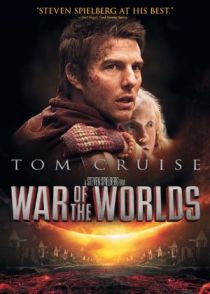
The H.G. Wells classic was adapted for the big screen twice, in 1953 with Gene Barry and produced by George Pal, and in 2005 starring Tom Cruise and directed by Steven Spielberg.  While both kept certain elements from the book, namely the “tripod” concept of the alien hardware and the fact that bacteria on Earth is what ultimately kills the aliens after human military proves to be useless, neither movie actually tells the story in the book.  Wells uses the technique of a first-person report by an unnamed narrator (similar to what he did in The Time Machine) who witnesses the first Martian “cylinder” land and open.  He sends his wife to London, then spends the rest of the story trying to reconnect to her while the world around him is destroyed.  The movies decided to set their plots in contemporary times and relocate the setting to the United States (the first in California, the second in New York–it’s good that aliens don’t land anywhere in the center of the continent).  This allowed for scenes with modern weaponry to battle against the aliens (who can forget the tanks being vaporized in the first adaptation?).  The plot of the 1953 film was pretty much about the lead characters caught in the midst of the battle, but executed extraordinarily well.  The Spielberg version has a divorced father trying to protect his kids while taking them across the battlefield to be reunited with their mother.  It would be great for a big-budget adaptation to be made that was actually consistent with the novel.  Imagine seeing a fleet of late 1800’s Naval ships being wiped out by alien technology!

Planet of the Apes (1969)

Planet of the Apes has had a curious history that includes the following: the original movie series encompassing five films with a curiously cyclical mythology; a poorly-received “re-imagining” by Tim Burton; a successful sort-of prequel that will probably spawn its own series of movies; a short-lived live-action TV show; a short-lived animated TV show; and if The Simpsons is to be believed, a stage musical.  However, none of them are anything like the original novel by Pierre Boulle.  The book’s protagonist is a French scientist named Ulysse Mérou, who invents a near light speed space ship that takes him to a planet in the Betelgeuse system (ah, that’s why Tim Burton wanted to make his version!).  The apes he finds on that planet live in a society almost identical to that of 20th Century Earth, including modern technology and transportation (in the movie, the apes had a somewhat primitive society).  He learns the ape language to fit into the simian culture, but is targeted by prejudice against humans.  Eventually, he falls in love with a human woman, who has his child, and he escapes the planet with his family to return to Earth.  Because of time distortion during space travel, hundreds of years have passed, so when he lands in Paris, he discovers that apes have now become the dominant species back home, too.  This entire story is told in a “message in a bottle” found by a couple “sailing” in space, who of course turn out to be apes that find the entire tale incredulous.

The Running Man (1987)

Stephen King wrote several books under the pen name Richard Bachman, including this science fiction tale set in a dystopian future, where a man competes on a game show to the death.  He is presented on stage as a horrible, menacing person for the audience to hate him, and then is turned loose with bounty hunters on his tail.  For every day he can stay alive, he racks up more money that will be turned over to his poverty-stricken family when he finally dies.  He must videotape 10 minutes of his surroundings and send the tapes back to the TV studio, which of course allows the hunters to track down his location.  To complicate matters, a reward is put on his head, so that any citizen can turn him in and receive a fortune, thereby turning every single person against him.  It’s a dark yet action-packed story that has no happy ending.  Of course, the movie became an Arnold Schwarzenegger vehicle where he spends a couple hours inside a building that’s been turned into the equivalent of a giant laser tag arena being pursued by cartoonish WWE rejects.  The Hunger Games did a better job telling this story than the movie adaption of The Running Man did.

Who Framed Roger Rabbit? (1988)

Most people don’t even know that Who Framed Roger Rabbit? was based on a book called Who Censored Roger Rabbit? written by Gary Wolf.  The popular movie combines live action with animation, using innovative techniques to make the cartoons seem a part of the real landscape.  The film is noteworthy for being the first time that Mickey Mouse and Bugs Bunny appear on screen together–and let’s not forget Donald Duck and Daffy Duck duelling on pianos.  The book by contrast features none of the classic characters from Walt Disney or Warner Bros.  In fact, the ‘toons featured in the novel aren’t even animated–they’re comic strip characters who have word balloons over their heads when they speak.  If that’s not blasphemy enough, Roger Rabbit is the one who’s actually murdered!  Yes, Eddie Valiant is the detective who must solve this mystery, but he teams up with Roger’s doppelganger, a splitting of the soul of sorts that the ‘toons do when they need stunt performers.  Roger’s doppelganger was running loose when he was killed, and has a finite amount of time to find out who killed him before the shade vanishes into nothingness.  Also, the plot has nothing to do with the film’s Cloverleaf corporation or the development of Los Angeles highways, as is the basis for the movie.

Forrest Gump (1994)

As he did with Who Framed Roger Rabbit?, Robert Zemeckis took the basics of the novel Forrest Gump and made it into something quite different.  Both the book and the movie feature the mentally-challenged eponymous character, Jenny, Bubba, and Lt. Dan; both version also show Forrest going to college on a football scholarship before serving in the Vietnam War and playing ping pong in China.  But that’s where the similarities end.  While the novel has instances where Forrest interacts with historical figures, they are different than ones in the film and seem to be used for comedy; the film instead uses these brushes with greatness to develop the theme that one man can make a difference by influencing countless people in his lifetime.  The movie cuts scenes from the book involving a NASA expedition, a chimp named Sue, cannibals, and explicit sex; instead, the film deals with the long-term effects of child abuse, the loss of faith in God due to tragedy, the early spread of AIDS from promiscuity and drug abuse, and how simple actions have great consequences.  The book featured a happy ending with Forrest settling down with Jenny to raise their child and go into the shrimping business, whereas the movie has a much more profound resolution.

The Lost World: Jurassic Park (1997)

When Steven Spielberg made cinematic history (again) by adapting Michael Crichton’s best seller Jurassic Park (with a first draft by the author himself), a sequel was a surety.  Crichton released his highly anticipated follow-up, The Lost World, a few years later.  However, the director wasn’t terribly fond of the book, which promoted Jeff Goldblum’s character Ian Malcolm as the protagonist and introduced a whole slew of new characters (including two stow-away children).  The only thing Spielberg liked was the concept of a second island, Site B, where dinosaurs roam without fences, and the characters trapped in a double-trailer that tyrannosauruses  push off the side of a cliff.  Supporting characters were re-worked, combined, or jettisoned completely; a new villain (John Hammond’s greedy nephew) was introduced; and the theme of hunters vs. gatherers was developed.  Additionally, the third act was a T-rex/car chase through San Diego–an event that was completely non-existent in the book.  It’s too bad, however, that Spielberg decided not to use Crichton’s depiction of a carnotaurus, a huge dino that hides by camouflaging itself like a chameleon.

The Bourne Supremacy (2004) and The Bourne Ultimatum (2007)

The Bourne Identity is a classic Robert Ludlum tale of a spy with amnesia who discovers that he’s being targeted for assassination by the CIA and other groups.  It was a hit movie with Matt Damon (and previous to that, a TV movie with Richard Chamberlain) that focused more on shaky-cam action rather than espionage and suspense.  But because it made a gajillion dollars, a sequel was in order.  Good news!  Ludlum had one already waiting to be adapted.  Universal Pictures bought the rights to The Bourne Supremacy and promptly threw out the story.  Eschewing the book’s plot about a Chinese coup and a Jason Bourne imitator, the movie picks up two years after the events in the first movie and essentially continues the action where it left off.  Since the story in the second film was changed so drastically from the novel, it stands to reason that the third film would follow the lead.  Sure enough, The Bourne Ultimatum finished the cinematic trilogy, picking up where Supremacy left off and progressing on like it was just an extension of that film.  The book had Bourne (aka David Webb) facing off against his old nemesis Carlos the Jackal.  Maybe some day these stories can be told on film.

I, Robot (2004)

Hopes were high when the Will Smith summer blockbuster I, Robot was made, because science fiction fans have been anxiously awaiting a film version of the Isaac Asimov book since it was published in 1950.  They’re still waiting.  The film casts Smith as a futuristic cop investigating a murder, and the primary suspect is a robot servant despite the Three Laws of Robotics.  CGI action ensues.  Asimov’s book was actually a collection of short stories whose only connection is the future where robots co-exist in harmony with humans (none of the stories were actually called “I, Robot,” but the anthology was inspired by a short story with that name by Eando Binder).  While Asimov’s Laws and a few character names from the stories are featured in the movie, the entire story is original–well, as original as any Hollywood extravaganza can be.

There Will Be Blood (2007)

Paul Thomas Anderson’s award winning film There Will Be Blood is “loosely” based on the Upton Sinclair novel Oil!–and by loosely, it means that both are about drilling oil in the early 1900’s and the protagonists are a father and son.  Other than that, most details are quite different.  The book focuses on the son, while the movie focuses on the father (character names are different in each version).  Sinclair meant for his book to be a social and political satire, similar to what he did with the anti-meat packing industry novel The Jungle.  Anderson said he only adapted the first 150 pages of the book for the film, a technique that had already been used in The Neverending Story and Simon Birch, two films that only used the first half of the books upon which they were based.

The question may be asked why studios and producers go through the trouble of buying the rights to books, only to discard everything but the title (and in the case of There Will Be Blood, that went out the window, too).  The answer is that Hollywood is notorious for not having trust in originality.  If a property is a proven product, like a book, TV series, previous movie, game, song, etc., then they can justify spending millions of dollars on the project.

copyright © 2012 FilmVerse

4 Comments

Humble Beginnings of Prominent Directors

It seems like these days, new directors are pulled out of obscurity to helm major studio blockbuster.  For instance, Universal Pictures put $170 million in the hands of first-time director Rupert Sanders to make Snow White and the Huntsman.  Why?  His IMDb page literally only has two other entries besides this film, and they’re “playing” himself in two TV shows, one about Hollywood and the other something from Portugal.  Oh, he was nominated for an award for directing television commercials.  Apparently according to studio executive philosophy, one award nomination is good enough to put someone in charge of hundreds of millions of dollars for a summer tent pole release.  Sure, other directors have hit it big on their first film–Orson Welles had Citizen Kane, Quentin Tarantino had Reservoir Dogs, and Zack Snyder had the remake of Dawn of the Dead (yes, Citizen Kane was just compared to Dawn of the Dead)–but most directors have to pay their dues.  Their early films were not necessarily instant classics, as the following proves:

Steven Spielberg

If you ask people what Steven Spielberg‘s first movie is, most would probably say Jaws, though his true fans may proudly proclaim that Duel holds that title.  Both are wrong.  Spielberg famously convinced Universal Studios honcho Sid Sheinberg to take him under his wing after showing off 16mm films he made as a teenager.  His first professional directing job was for the pilot of Rod Serling’s Night Gallery, which in itself is pretty impressive.  He knocked around television for a few years, directing episodes of shows like Columbo and Marcus Welby, M.D. before graduating to TV movies like the aforementioned Duel (which was released in the theaters in Europe with additional footage) and the little-seen Something Evil (a precursor to Poltergeist with Sandy Dennis and Johnny Whitaker).  Finally, he broke into theatrical motion pictures with The Sugarland Express starring Goldie Hawn as a mother who breaks her husband out of jail, kidnaps a cop, and goes on the run to retrieve her baby from Social Services.  Not many people are familiar with this movie nowadays, and it didn’t make a huge splash at the box office when it was released, but it did win an award for its screenplay at Cannes.  It was while working on that film that Spielberg came across a manuscript for an as-yet-unreleased novel about a killer shark on the desk of producer David Brown that was to be his next film.

Martin Scorsese

Martin Scorsese continues to impress audiences and critics alike with films like The Departed and Hugo, but of course he made a name for himself directing gritty, violent films with Robert De Niro like Mean Streets, Taxi Driver, and Raging Bull (not to mention Alice Doesn’t Live Here Anymore, which was the basis for the ’70s sitcom Alice)Scorsese went to film school at NYU, and the first film he did upon leaving school established his long-term relationship with actor Harvey Keitel and editor Thelma Schoonmaker with a little black and white movie called Who’s That Knocking on My Door (originally titled I Call First) that no one saw.  However, it got him noticed by producer Roger Corman, who was known for low-budget exploitation films.  Originally Corman wanted Scorsese to do a sequel to Bloody Mama, but changed his mind and asked him to direct Boxcar Bertha, which Scorsese accepted–with the instructions of having sex, violence, or explosions every 15 pages of the screenplay.  This film allowed him to learn more about the craft of filmmaking while having fun on the set, paving the way for his next film, the critically acclaimed Mean Streets.

Robert Wise

The late Robert Wise walked away with two Oscars each for directing and producing The Sound of Music and West Side Story, but is also known for such classics as The Haunting, The Day the Earth Stood Still (the non-Keanu Reeves version), The Sand Pebbles, The Andromeda Strain, The Hindenburg, and Star Trek: The Motion Picture, not to mention the fact that he was nominated for an Academy Award for editing Citizen Kane.  However, few people know that his first credited film as a director was Curse of the Cat People (even though IMDb lists Mademoiselle Fifi, which came out the same year).  Wise had a successful run as a film editor, and it was this job that he was to do on the sequel to the hit horror flick The Cat People; though when the film’s first director, Gunther Von Fritsch, was fired, Wise stepped in to finish it.  Both shared directing credit, but that started a decades-long career for Wise as a director/producer, proving that he could shift genres smoothly, going from science fiction to musicals to thrillers easily.

Francis Ford Coppola

Like Scorsese, Francis Ford Coppola is known for mobster movies from the ’70s with Robert De Niro–The Godfather and The Godfather Part II are legendary.  Also like Scorsese, he was a film school graduate (though from UCLA) who knocked around in the low-budget arena before hitting it big–primarily doing nudie films like Tonight for Sure and The Bellboy and the Playgirls, where he shot new color footage to a black-and-white German film.  Then he moved up in the world by working for Roger Corman (again, like Scorsese) with an uncredited directing job on The Terror with Jack Nicholson and Boris Karloff and on Dementia 13The Godfather is actually the ninth film listed on IMDb for Coppola.  Apparently, the training those un-famous movies gave him paid off, considering he won five Oscars (plus an honorary one) with nine additional nominations.  He is also known for taking chances with his films, often financing them himself, and often going bankrupt as a result.  At least he has his wine as a backup.

Alfred Hitchcock

The “master of suspense,” Alfred Hitchcock has created some of the most memorable films of all time–Psycho, The Birds, North by Northwest, Vertigo, Rear Window, and Dial M for Murder, just to name a few.  Any one of those movies would be enough for most directors to envy him, let alone his entire body of work.  Of course, most people have never seen his entire body of work; in fact, it would surprise people to find out that he actually directed a screwball comedy.  Hitch didn’t even start making movies in Hollywood until 1940 with the Oscar-winning Rebecca starring Laurence Olivier and Joan Fontaine, his 26th feature film as a director.  Until then, he worked in his homeland of England, having started out in the days of silent films.  In fact, he began his film career as a writer and also designed title cards for silent films before moving into the directing chair himself.  His earliest work has been lost, however; half of his silent film The White Shadow was recently discovered in New Zealand.  It wasn’t until his tenth film, Blackmail, that sound was introduced, and that was in the middle of production.  Mostly in that film, he played around with sound effects to add to the suspense he created with the visuals.  Many of these early silent and sound productions are in the public domain, and can be found in box sets in most video stores.

copyright © 2012 FilmVerse

4 Comments

The Twilight Zone Quiz

Rod Serling’s innovative anthology show The Twilight Zone had more influence on our society than perhaps any other scripted series.  Its episodes illuminated themes of society and the human condition that television networks were afraid to tackle during that time by wrapping its messages in stories of horror, science fiction, and fantasy.  Known for its iconic theme music and its twist endings,  The Twilight Zone spawned two remake TV shows, an ill-fated feature film (with another rumored to be in the works), and many copycat shows as well as inspiring writers and filmmakers as diverse as Stephen King, Steven Spielberg, John Landis, and M. Night Shyamalan.

How much do you know about The Twilight Zone?  Take our quiz and find out by clicking the following button:

Take The Twilight Zone Quiz!

After taking the quiz, scroll down to see more information about the questions (or cheat and skip the quiz altogether):

.

.

.

.

.

.

.

.

.

.

.

.

.

.

Last warning for spoilers!

.

.

.

.

.

.

.

.

.

.

.

.

.

.

1

According to The Twilight Zone Companion by Marc Scott Zicree, Rod Serling had written a screenplay entitled The Time Element when he was in college.  When he was developing The Twilight Zone, he re-wrote that script to be an hour long pilot.  However, CBS shelved it, only to later pull it out to use as an episode of Desilu Playhouse for the 1958-59 season.

2

The pilot for The Twilight Zone was “Where Is Everyone?” written by Rod Serling and directed by Robert Stevens.  It was about an Air Force pilot who finds himself in a small town that is completely empty, despite evidence that people had been there recently.  It turns out that this is all in his mind, and in reality he is in an isolation chamber training to become an astronaut.

3

Rod Serling wrote 92 episodes of the 156 produced for the original run of The Twilight Zone.

4

Rod Serling won two Emmys for writing The Twilight Zone in 1960 and 1961 (given for various episodes).

5

During the first season, Rod Serling performed the opening narration off-camera.  In the last episode of the season, he walked into the scene at the end of the story to do his wrap-up and actually interacted with the main character–who made Serling disappear.  From that point on for the remainder of the series, he did his episode introductions on-camera.

6

At the end of the third season, The Twilight Zone was without a sponsor, so CBS removed it from the fall schedule.  The network eventually ordered new episodes as a mid-season replacement, but decided to expand it from a half an hour to an hour expecting to expand its audience as well.  During the time when the fate of the show was in question, Rod Serling had accepted a teaching job at Antioch College in Ohio.  When the show was renewed, Serling wrote his scripts long-distance and filmed his introductions all at once when he flew in to L.A., standing in front of a gray neutral background rather than being in the location of the episode.  Eighteen hour-long episodes were produced, but ratings fell and the show returned to its half-hour format for season 5.

7

Upon changing the format of the show to tell hour-long stories, the word “The” was dropped from the title, making it Twilight Zone.  The title remained this way into season 5.

8

Rod Serling wrote a pilot for a comedy involving an angel who helps out a nerdy outcast, but when CBS did not buy it, Serling turned “Mr. Bevis” into an episode of The Twilight Zone in the first season.  By season three, Serling re-worked the concept but turned the hapless title character into a woman.  Carol Burnett starred in “Cavender is Coming” with Jesse White playing the angel Cavender.  The intent was that this would be a pilot for a series following White’s character interacting with a new person each week with comedic results (as opposed to the Bevis concept, which both Bevis and the angel would star in the series).  “Cavender is Coming” has the distinction of having a laugh track, included at CBS’s insistence despite the producer’s protests.

9

Richard Donner, the director of Superman: the Movie, The Goonies, and all four Lethal Weapon movies directed six Twilight Zone episodes, all in season 5:

  • “Nightmare at 20,000 Feet”
  • “From Agnes–with Love”
  • “Sounds and Silences”
  • “The Jeopardy Room” (which has absolutely no horror, science fiction, or fantasy elements in the story)
  • “The Brain Center at Whipple’s”
  • “Come Wander with Me”

10

During the 5th season,Twilight Zone was over-budget.  One way to resolve this problem was to purchase the rights to the short film “An Occurrence at Owl Creek Bridge,” which had won an Oscar and a BAFTA for best short film.  It was the right length and had appropriate subject matter to fit the show’s format, and despite it being a French production, it was set during the American Civil War and did not feature any dialogue.

copyright © 2012 FilmVerse

9 Comments

Recent News Events That Parallel Movie Plots

In the motion picture industry, many plots are inspired by true events–Dick Wolf made a career out of making plots of Law & Order “ripped from the headlines.”  But there are times when the saying “life imitates art” is true.  A number of times in the past year or so, news events have happened that are right out of movies, such as the following.

Piranha (1978)

Joe Dante’s original Piranha was a tongue-in-cheek horror film about vacationers being chomped on by ravenous South American fish released into a river in the United States.  It was followed up by James Cameron’s first directorial effort and two remakes (plus an upcoming sequel to the most recent remake).

While those terrifying creatures have yet to feast on beach-goers in the States, 15 swimmers at a popular river beach in western Brazil were bitten by a school of piranhas in September, 2011.  True to the disaster film rule that things like this happen during holidays or special event, the attacks happened during the country’s largest fishing festival, which drew 200,000 people to the city of Caceres for tournaments and concerts.  Apparently the fish wanted in on the action.

Weekend at Bernie’s (1989)

The quirky comedy Weekend at Bernies, which was a surprise hit, featured a couple of guys who drag around a recently deceased body, pretending that he’s still alive to party at his beach house while the mafia tries to murder the already dead man.  Due to its success, a dismal sequel was inevitable.

In September, 2011, two men were arrested for attempting a similar scam.  When their friend died, these guys apparently thought it was a good idea to pretend that he was still alive and drive the corpse around town to bars and restaurants, charging the tab to the deceased.  They also removed money from an ATM with the late friend’s bank card.  No word on a dismal sequel.

Sleepers (1996)

The 1996 Barry Levinson film Sleepers was about four boys in Hell’s Kitchen who inadvertently injure a man after they try to steal his vending cart, but it ends up falling down a flight of stairs on top of the man.  The film was based on a book by Lorenzo Carcaterra, which was a dramatization of events that supposedly happened (though was contested).  Because of this event, the boys were sent to a juvenile detention center, where they were sexually abused by a guard.  Years later, two of the boys, now adults, murder the vicious guard in an act of revenge.

In 2011, a similar event happened in East Harlem.  Two 12-year-old boys (roughly the same age as the ones in Sleepers) were playing with shopping carts on the fourth flood of a mall.  They pushed one of the carts down a flight of stairs, where it fell on top of a woman, sending her to the hospital with life-threatening injuries.  The boys were arrested and charged with assault.

Face/Off (1997)

The over-the-top John Woo film (which is probably redundant) Face/Off featured John Travolta and Nicholas Cage as a cop and a crime boss who undergo face transplants–literally switching faces with each other and assuming the identity of each other while attempting to upstage one another.  Somehow, taking on another person’s face in this movie causes their entire body, hair, and voice to change as well, but a plot like this doesn’t rely on logic.

Taking a cue from Woo and company, Maryland doctors completed what they call the “world’s most comprehensive face transplant” in March, 2012, on a man who lost most of his features after being shot in the face in 1997.  Of course, this wasn’t the first such operation.  In 2011, a woman whose face was torn off by a chimp received a similar face transplant (as opposed to a simian face transplant).  Let’s hope the doctors didn’t mix up these two patients, otherwise they’d have to assume each other’s identities.

Holes (2003)

The film adaptation of Louis Sachar’s young adult novel Holes has the distinction of inflicting Shia LeBeouf onto the cinematic world.  The young actor plays a kid who’s falsely accused of stealing a star athlete’s shoes, and then a crooked judge sentences him to an even more crooked juvenile camp where the kids toil in the hot sun all day digging holes in the desert looking for buried treasure for the camp’s owners.  That story had to be fiction, because our legal system simply does not operate that way.

Well…

Two juvenile court judges in Pennsylvania had apparently been doing the very same thing as the fictional judge in Holes.  Developers of a for-profit juvenile detention center paid one of the judges a million dollars in a “kids for cash” scheme where they would ship kids off to the facility after sentencing them on minor or questionable charges.  Judge Mark Ciavarella received his own sentence of 28 years in prison, presumably not digging holes in the desert.

Sweeney Todd: The Demon Barber of Fleet Street (2007)

Sweeney Todd: The Demon Barber of Fleet Street was a match made in Heaven–Tim Burton directing Johnny Depp and Helena Bonham Carter.  Well, that’s not what made the film a match made in Heaven; that would be the subject matter–a dejected loner with a pasty white face and a shock of black hair (imagine that, in a Tim Burton film!) returns after a 15-year imprisonment to get revenge on the judge who sentenced him by slicing the throats of as many people as he can get to sit in his barber’s chair.  To dispose of the bodies, the woman who owns the bakery downstairs chops up the remains and cooks them in meat pies to sell to the hungry public.  It’s bloody and gruesome–and set to song!

A Brazilian trio must have confused themselves for Burton, Depp, and Carter.  In April, 2012, police discovered that they had killed at least two women who thought they were being hired to be nannies and ate their flesh.  But they knew how to share–they also cooked up the corpses in–you guessed it–meat pies, which they served to the locals.  At least they didn’t go swimming with piranhas.

21 Jump Street (2012)

Speaking of Johnny Depp, he gained fame as the star of the TV show 21 Jump Street, which was made into a 2012 movie that he had a cameo in (ridding himself once and for all of the shame of his role).  The TV show and the movie were both about young-looking cops who go undercover in high school to entrap drug dealers and spit-wad throwers.  In Hollywood, teenagers tend to average in age of 32, so it’s not unbelievable that grown-ups could pass themselves off as minors.  Surely that wouldn’t work in the real world.

Except it did.  A 22-year-old rookie cop with braces was sent undercover in a Central California school and spent eight months reliving his senior year until he busted a drug ring and arrested 12 students ranging in age from 15 to 19.  Next up for him is to go undercover as a Brazilian barber.

copyright © 2012 FilmVerse

6 Comments

Why We Need Another Tim Burton

Tim Burton has one of the most unique and identifiable styles of any filmmaker who has ever worked in Hollywood.  His films have distinctive features–protagonists who are largely loners, persecuted by society; characters tend to have pasty white faces with unkempt black hair (not unlike Burton himself); art direction is characterized by slanted doorways and checkerboard floors; camerawork is often like animated films, capturing odd angles and fluid movements that add a surreal quality to the cinematography; the tone of the films are generally darkly comedic, and even the horrific elements are broadly executed so that the violence and gore are done for mostly for cartoonish amusement rather than real terror.  He’s inspired goths for decades, yet is accessible to the general public.  It’s quite amazing that he’s had the success he’s had, considering that for all intents and purposes, his films should have limited appeal; however, his body of work has amassed nearly $1.7 billion, putting him in the top ten directors of all time (from a financial standpoint).

With Burton’s background in art and animation, it’s clear that his films have a distinctive artistic vision, one lacking in the work of many directors.  This is not surprising, since many filmmakers transition from other professions such as acting, writing, cinematography, or editing; of course others come out of film school and go to work directing smaller projects like music videos and television commercials, moving up the ranks to TV series or independent films before making the leap to big budget studio efforts.  Burton has been accused of being somewhat of a one-trick pony, repeating themes and style so that all of his movies tend to look alike, but this is what makes him stand out from the crowd.  If Spielberg is the Norman Rockwell of directors, then Tim Burton is the Bernie Wrightson.  The problem is that Burton made a name for himself doing strange original efforts like Pee Wee’s Big AdventureBeetlejuice, and Edward Scissorhands, but seems to have made a more recent career out of doing remakes, re-tellings, or re-imaginings (including remaking his own work with Frankenweenie).  Of course, his biggest hit until recently was Batman, which of course was based on other material, but was one of the first superhero comic book adaptations to be successful–mainly because of Burton’s bizarre world building.  He seems content with continuing to apply his brand of visuals and characters onto known properties instead of creating something truly original again.  We need another director like him to take his mantle.

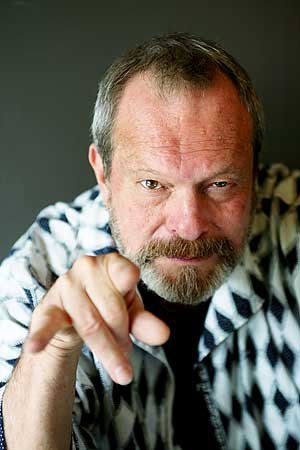
He is preceded by several filmmakers who had interesting, artistic flair to their films.  Terry Gilliam broke away from the Monty Python gang to direct his own stand-alone films.  Like Burton, he came from animation, and that heavily influences his work, which is largely fantastical and often surreal.  He’s had a sporadic career with several hits (Brazil, The Fisher King, Twelve Monkeys) and many flops (The Adventures of Baron Munchausen, Tide Land, The Brothers Grimm) and others that suffered major setbacks (The Imaginarium of Doctor Parnassus, the unfinished Don Quixote film with Johnny Depp).  There was also David Lynch, whose dark and bizarre Eraserhead kicked off a career of nightmarish, hallucinogenic films that created a genre all its own.  On the more commercial end of things, Joe Dante walked the line of horror and comedy with films like The Howling, Twilight Zone: the Movie and Gremlins, often teaming with Steven Spielberg.  Rather than being a cartoonist himself, his movies were influenced by cartoons he watched, primarily those from Warner Bros., which explains why Looney Tunes Back in Action and Small Soldiers are on his resume.  In fact, at one time, Dante was considered for the director’s chair for Batman before it went to Burton.  None of these directors had the success Burton has had, and it’s likely none will have any more hits on their hands (Gilliam still has projects in the works; Lynch is retired; Dante is now doing TV like Hawaii 5-0).

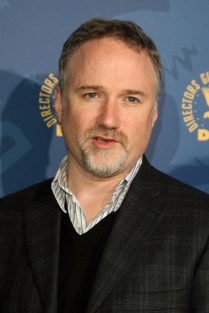
In the ’90s, Burton had competition in the visual filmmaking department from Jean Pierre Jeunet, Barry Sonnenfeld, and David Fincher.  Jeunet (with sometimes partner Marc Caro) made a couple of post-apocalyptic French films, Delicatessen and City of Lost Children that had comedic elements set among a stark dystopian setting.  Alien Resurrection killed his Hollywood career, but he bounced back with Amelie and A Very Long Engagement.  Sonnenfeld, coming from a solid cinematography career, became Burton-lite with a pair of Addams Family films, Get Shorty, and Men in Black.  Unfortunately, bombs like Wild, Wild West caused his career to spiral downward into dreck like RV and other straight comedies that forego any visual flair that he once had.  Perhaps Men in Black III will pull him out of that rut.  By contrast, Fincher has had the most success.  His movies rely mostly on visuals done by the camera rather on art direction like the others in this list, but his films usually take on a depressing, brown tone that is still evident in his most recent work, The Girl with the Dragon Tattoo.  His films have gone the mainstream route, though they still retain a Fincher feel; however, there is no mistaking Fincher’s films with those made by Tim Burton.

More recently, other filmmakers have emerged that have had their own distinctive flavor that are in the Burton realm in the fact that their films have a focused artistic vision–Darren Aronofsky, Tarsem Singh, and  Zack Snyder.  Aronofsky has worked almost exclusively in the independent cinematic world with his films Pi, Requiem for a Dream, The Fountain, The Wrestler, and most recently, Black Swan.  These films are dark and brooding, with surreal imagery sometimes mixing with documentary-style photography.  It’s perhaps no coincidence that he was also considered to take over the Batman series before Christopher Nolan stepped on board.   Singh, like Burton, had been an artist and this shows in his films–The Cell, The Fall, The Immortals, and Mirror, Mirror are all like paintings come to life.  It’s too bad that he isn’t very capable of telling a compelling story.  While Burton has been accused of not being a good storyteller (he even admitted that he can’t tell a good script from a bad one), his movies draw you into their world and transport you into your imagination.  Singh’s movies look good, but feel empty and soulless, often like a computer generated video game.  Speaking of which, there’s Snyder, who’s next project is a reboot of  Superman, Man of Steel (Burton was once attached to direct his own reboot of Superman, but the plug was pulled on it).  He works a lot in the realm of CGI, creating the entire worlds of his films in the computer with such films as 300 and Sucker Punch.  He has often been criticized for this approach, but there is no mistaking a Zack Snyder film.  Of course, the same can be said for Michael Bay.

What we need is a new director who can mix horror with humor, who can put art direction and camerawork to his advantage using his own creative style, who can create movies that are highly imaginative and exciting to watch simply because they present the audience with new experiences unlike any that have come before.  Surely some directors are already doing this and have yet to be discovered by the world at large.  Or maybe Tim Burton can decide to stop rehashing old projects and regain the fresh perspective that made him a one-of-a-kind filmmaker and return to making original movies again.

copyright © 2012 FilmVerse