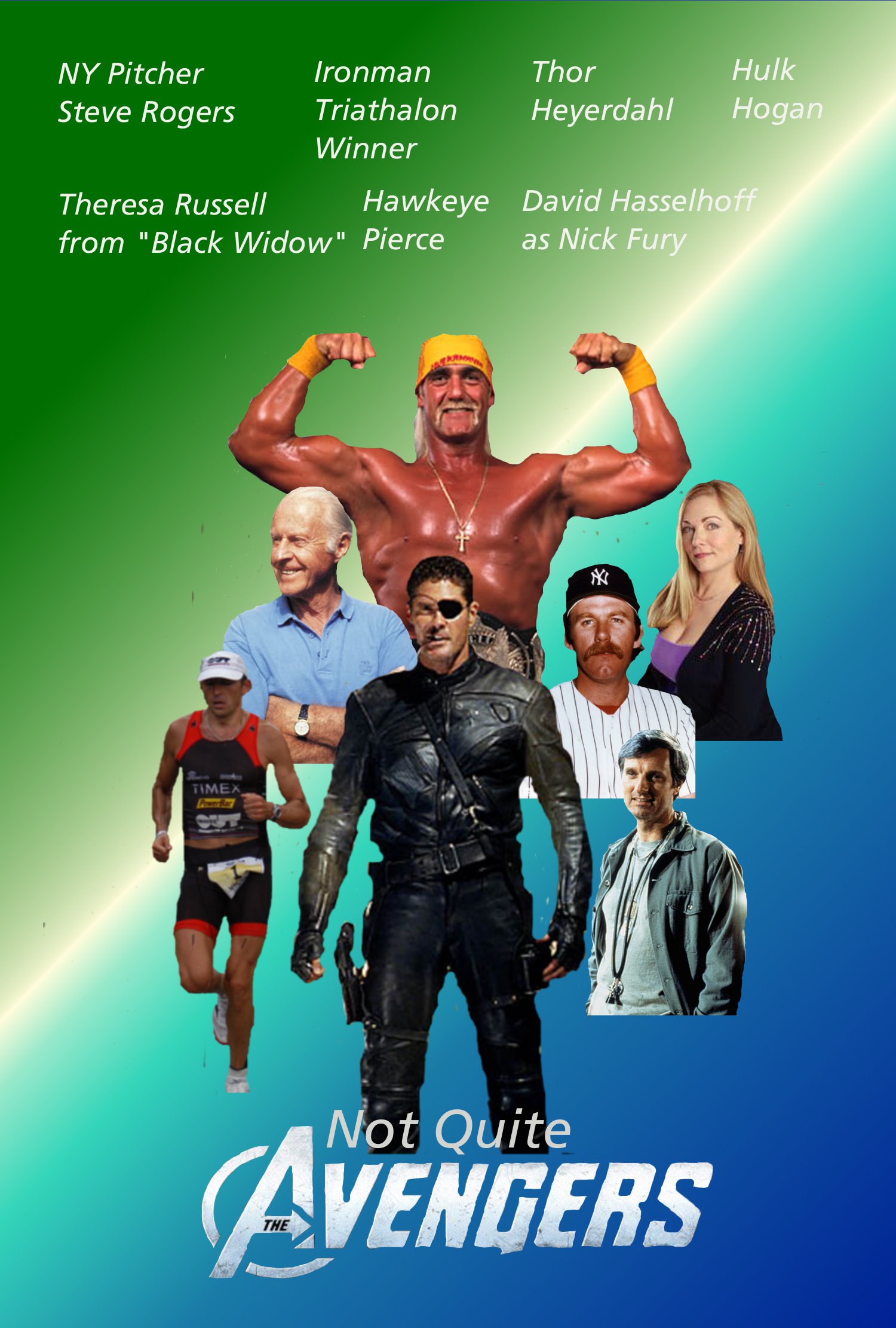
I would actually pay to see this movie…though something tells me it won’t have the same impact as the Joss Whedon film.
copyright © 2012 FilmVerse
I would actually pay to see this movie…though something tells me it won’t have the same impact as the Joss Whedon film.
copyright © 2012 FilmVerse

The self-proclaimed King of the World directed movies that have made more money than any other filmmaker except for Steven Spielberg–managing to do this with only eight movies. James Cameron‘s last two efforts have fought for the distinction of being the highest-grossing movie of all time. He has led the way for the 3D revolution, championing the use of the format for artistic reasons and not just for a marketing cash grab. Each time he directs, he develops a new technology specifically for that movie, such as an innovative wireless recording system for The Abyss, morphing effects for Terminator 2: Judgement Day, and new motion capture cameras for Avatar. He is known for his difficulty as a perfectionist, yet cast and crew work with him repeatedly with great respect. His love for the ocean culminated in 2012 with a solo trip to the deepest trench in the world. How much do you know about him as a filmmaker? Click the button below and take the James Cameron quiz:
Take the James Cameron Quiz!

After taking the quiz, scroll down to see more information about the questions (or cheat and skip the quiz altogether):
.
.
.
.
.
.
.
.
.
.
.
.
.
.
Last warning for spoilers!
.
.
.
.
.
.
.
.
.
.
.
.
.
.
Prior to directing his first feature film, James Cameron oversaw the special effects on the Roger Corman production Battle Beyond the Stars (1980), where he also served as Art Director. He also contributed to the special effects in Escape from New York (1981) and was the Production Designer and Second Unit Director for Galaxy of Terror (1981), and was a Production Assistant for Rock ‘n’ Roll High School (1979).
The first movie that James Cameron directed was Piranha Two: The Spawning (1981), which he took over from another director but was fired during production.
James Cameron was married five times to the following women:
James Cameron wrote two screenplays for feature films that he did not direct–Rambo: First Blood Part II and Strange Days.
James Cameron created the TV series Dark Angel and directed the series finale “Freak Nation”.
Despite the fact that James Cameron is known for making movies with record-breaking budgets, The Terminator was made on meager $6.4 million, which was still fairly low in 1984.
The actor who worked the most with James Cameron was Bill Paxton, who appeared in The Terminator, Aliens, True Lies, and Titanic. Paxton also provided the narration and appeared as himself in the IMAX documentary Ghosts of the Abyss. Including the short for the T2 show at Universal Studios and the TV documentary Expedition: Bismark, Cameron worked with Arnold Schwarzenegger four times, Michael Biehn four times (his cameo was cut from the theatrical version of T2), Lance Henrikson four times, Linda Hamilton three times, Jenette Goldstein three times, Sigourney Weaver twice, and Earl Boen twice.
James Cameron acted as a producer on four feature films that he did not direct:
The first project that James Cameron directed in 3D was “T2 3-D: Battle Across Time” for the Universal Studios theme park in Orlando, FL.
The eight feature films James Cameron directed made a worldwide total of $5.9 billion.
copyright © 2012 FilmVerse

I am spreading my wings somewhat, as I have signed on to contribute articles to a brand new entertainment-based website Showwatcher.com, published in conjunction with Triggerstreet.com. Articles about film, television, technology, and nerdy stuff are posted on a daily basis. My articles will be similar to the ones found here on FilmVerse. I can brag that my article Classic TV Shows Turned Into Film was the very first that went live. Check it out!
 This article originally appeared on Screenwriters Daily April 1, 2012.
It has been said that story is character–the plot is determined by the decisions your protagonist makes and how the character reacts to situations he/she must deal with. Like in the make-your-own-adventure books, the story becomes something completely different if the protagonist takes a right turn rather than a left turn. Before you truly know how the plot will work itself out, you must know your characters. This is where many stories fail because they are populated with flat, uninteresting characters. How do you develop the characters to make them strong, interesting, and entertaining? To flesh out the names on a page into three dimensional living and breathing human beings in your story, you must determine several elements pertaining to the characters.
You have an idea for a story, but need to figure out who your protagonist is. The first thing is to decide upon the physical person–sex, age, race, and body type. Let’s say you have a story about a settler in the Old West threatened by outlaws. This threat would obviously be handled differently if your protagonist is a man or a woman. Right there, that simple decision will determine the direction your plot will take. A man might be more proactive and willing to fight with violence, where a woman may be more reactive and will try to handle the threat in a more subversive manner.
Age is a big determining factor as well. A young adult would look at the situation one way, perhaps with idealism or naivete, while a person late in life would possibly be more cynical and bitter. With just these two choices so far, sex and age, you have a clearer picture of who this person is without even yet adding personality traits.
It’s usually suggested by screenwriting books to not name a character’s race unless it’s essential to the plot, thereby allowing directors to cast actors of their choice. However, as the writer, you should have a clear idea in your mind as to what race the character is because it will help you form a better picture in your mind. The truth of Hollywood is that unless otherwise stated, usually a screenplay’s protagonist is assumed to be white (the exception is if the film could star an actor like Will Smith or Denzel Washington). The race of the character would definitely be influenced by elements within the culture and society, as discussed later.
As with race, many times the protagonist’s physical attributes are left vague so that casting is done with the widest possible candidates for the role. Unless it’s critical to the story that a character have blond hair and blue eyes (for instance, in King Kong, the darker skinned natives were amazed by Ann Darrow’s light hair and fair skin, so they used her as an offering to the giant ape), those are details that are not necessary to include in your character description. However, we need to get a general sense of the person’s physical being. Returning to our Old West scenario, if you decided that the protagonist was a young man who headed to the frontier from Boston, it might serve the story to have him slight of build and short of stature in contrast to the larger, more muscular villains he must oppose. His physical description itself adds conflict to the story. By contrast, if you had a big-boned middle-aged woman, she just might be able to handle herself along side the men during times of hardship. In his book On Writing, Stephen King says that he usually keeps his main characters vague so that the reader can project themselves onto the protagonist while describing every physical detail of the supporting characters. In a screenplay, this is good advice, too.
While it’s often best to left race unstated in a screenplay, the reason that you as the writer need to have a clear picture of this character is because of how society and the culture in which he/she exists has molded his/her personality. Take two people from different races who grew up in the same location and you’re going to end up with two diverse experiences. Think how our frontier story would change by making the young man be from African heritage. He could very well be from Boston, the son or even grandson of freed slaves who had not known the life of slavery but yet still must deal with the prejudices of others of the time. How would a Chinese immigrant in this role change the tale? Even in contemporary stories, a person’s race will affect the point of view. This doesn’t have to be overt or sanctimonious. Themes of race relations do not even have to be present in the story, but the character’s world outlook will affect the decisions made.
Taking race out of the equation, there are other cultural aspects to think about. Geographic region is one; where your character is raised and currently lives is a huge factor in that person’s ideology. Is he/she from a politically conservative or liberal area? Do those views conflict with the character’s own ideas? People from urban areas contrast with those from rural and even suburban areas. Family religion (even if the character does not practice it) adds a lot to who that person is. Does your character come from wealth or poverty (or somewhere in between)? Pop psychology suggests that our childhoods creates who we become as adults–use this theory. Think about how your character grew up and what influences were all around him or her that may have positively or negatively made an impact. Regional dialects and idioms will alter a character’s dialogue as well. Think about local color presented in movies such as Fargo, My Cousin Vinnie, Valley Girl, or even the Spider-man films based strictly on where the characters currently or previously lived.
A lot of what defines an individual is his/her chosen career, or the job the person is stuck in. Think about how people identify themselves: “I’m a truck driver;” “He’s a delivery boy;” “She’s an bank manager;” “You’re an unemployed freeloader.” A job often dictates appearance, since people spend much of their day at work, as well as demeanor because certain occupations require certain personality types or mold behavior (ever try to have a normal conversation with a kindergarten teacher without being talked to as a 5-year-old?). A person’s career often places them in a particular place in society, and their world view will be affected by it. Despite what television shows may indicate, people are employed as more than doctors, lawyers, and cops. Find something unique and unusual that is specific for your characters.
Similarly, the education a character has received makes a difference in their whole being. A high school drop out will not have the vocabulary as a person with a doctorate. Young characters will most likely be students, but their future goals (higher education aspirations as well as what they want to be when they grow up) says a lot about their personality and choices they make at this stage of life. A boy with little ambition in life will be drastically different than one who wants to be a pilot; similarly a girl who dreams of marrying a rich man will contrast with one who dreams of being a molecular biologist.
Now we’re getting to the nitty gritty of the plot. What is the one thing your protagonist wants? This is the main conflict that drives the story. Indiana Jones wants to find an important lost religious artifact. Marty McFly wants to return to his own time. Captain Ahab wants to kill the whale. This is the goal that is established at the end of Act 1 and carries through to the climax in Act 3. You establish the goal, throw obstacles at the protagonist to prevent the goal from being reached, and then bring this character to the moment of either obtaining the goal or losing it forever. Remember, that this goal does not always have to be successful. Is it more important for the protagonist to not reach it? Indiana Jones always gives up the fortune and glory he seeks in favor of enlightenment. Ahab was destroyed by Moby Dick.
Once you have your protagonist’s primary goal determined, you have the essence of your plot. Now it’s time to add nuances to your character. Are there other things that he/she wants or needs, even if it’s not clear to the character? Marty McFly wants to go home, but also must make sure that his mother and father fall in love so that he will exist. He also wants to get the girl. By the end of the first Back to the Future, he has made things right with his parents, returned to his own time, and kisses Jennifer. Not only has his primary goal been successfully gained, but so too were his secondary desires.
In our screenplay about the skinny young guy from Boston trying to survive in the Old West, his primary goal is to defeat the scoundrels who are threatening him on his homestead. By the end of the story, we hope that he is victorious. He should have some other goals that make his struggle more interesting. The audience needs to invest more into his plight because more is at stake than simply holding his own on his land. Does he want to fall in love and start a family? Is there a secret gold mine on this property that nobody can no about that he plans to exploit? Is he trying to overcome the expectations made on him from his station in live back home and be his own man? Through the course of the story, set down by the primary goal, these other needs will be addressed–some perhaps for the positive while some may have negative outcomes. Maybe he meets the woman of his dreams, but she is killed by the bad guys. Perhaps he discovers that the gold mine doesn’t exist, but he learns that he doesn’t need it after all. It could turn out that what the character traits he brought with him helps him deal with his new challenges, so he doesn’t have to outright reject everything that he was previously.
In Greek tragedy, the protagonist had one major negative character trait that ultimately brought about his downfall. Even if your story is a comedy, an adventure, or an uplifting drama, you want to add dimensions to your protagonist to avoid making him/her a saint. Perfect people are boring. Even Indiana Jones is afraid of snakes. Kryptonite weakens Superman (who isn’t always the Boy Scout people think he is). In the first Back to the Future, Marty is shown to have self doubt, a trait similar to that of his father. Near the end of the movie, he not only plays onstage with a band, but he introduces a classic rock song to the teenage audience. He has overcome that flaw. The filmmakers obviously felt that it was too weak, so in Part 2, suddenly he overreacts whenever someone calls him “chicken,” which is what caused his future self’s pitiable life. By the end of Part 3, he learns to overcome this weakness (even though it was a lame and rather shallow device).
What is your protagonist’s fatal flaw? “Fatal” does not have to literally mean that it will kill your hero; it will cause distress and bring about conflict that may prevent the protagonist from reaching his/her primary goal. If our Boston-bred pioneer has a drinking problem, for instance, this could be exploited by the enemy to do him in. It could also be a wall between him and his potential love interest, who abhors alcohol. Being drunk may cloud his judgement and he can only defeat the antagonists once he sobers up. This flaw will either bring about the protagonist’s destruction, or be the one thing he must overcome in order to find the happy ending desired.
Now that we have the protagonist’s physical traits determined, laid out his/her backstory, clearly stated the primary and secondary goals, and given him/her a major flaw that is detrimental to the plot, there are a few more things to consider. One suggestion is to layer the character with a few quirks. These are not necessarily good or bad, but they make the character unique–nail biting, butterfly collecting, having OCD or ADHD, talking incessantly, making jokes at inappropriate times, being clumsy, collecting old bottles, wearing strange hats, and so on. List three odd or unusual things about this person that is unlike any other character in your story and weave these into the portrait of the character that you create in the screenplay. All these elements need to be established in Act 1 and carry throughout the story, and if you can work them into the resolution, all the better.
Think about some of the most memorable characters and what aspects of them have little to do with the central conflict–Sherlock Holmes smokes a pipe, plays a violin badly, and has an cocaine addiction; Indy wears a fedora and carries a whip while in the field, but wears glasses and a bow tie while teaching; Erin Brockovich cusses and wears revealing clothing. These character traits make the audience enjoy spending a couple hours with them.
As with specific traits, make a list of what your protagonist likes and dislikes. Again, these may not have a direct impact on the plot, but will go a long way with understanding him/her as a human being. If you look at a TV series like M*A*S*H, each of the characters were developed over time as having specific likes and dislikes. Charles loved classical music, whereas it annoyed his roomates Hawkeye and BJ. Colonel Potter enjoyed painting, riding horses, and reading Zane Grey westerns. These preferences helped the audience connect with them as real people. Similarly, Star Trek: The Next Generation gave its characters interests that fleshed them out as more than just the crew on a starship (for instance, Worf came to love the taste of prune juice).
Characters are developed in a screenplay largely by what they say and what they do–dialogue and action. What they say and how they act toward other people is critical. In his authors notes for the sequels to Ender’s Game, Orson Scott Card discussed the issue of how his characters relate to the others, and said that he often sticks note cards all over his computer that lists how each character in his story reacts to every other one. How John treats Mary is different than how he treats Bob; similarly, Mary will act differently toward John and Bob. Each independent relationship is unique from every other. The complexity grows with a larger cast. Your job as a writer is to keep these relationships clear and understandable for the audience. The better developed these relationships are, the more realistic your story will be.
Just like people react to other people differently, they will also react to various situations in many ways. Stress can make one person stronger while it may make someone else break. Something can be funny to one person and offensive to another. What frightens one person may exhilarate someone else. These reactions will inform the decisions that your protagonist must make in context to the story. A character may be compelled into action because of a sense of justice, commitment to a person or ideology, or protection of loved ones; a different character may not have the same reactions so would make a different decision that would in effect change the plot.
Once you have determined all these aspects of your character, it will be easy to allow him/her to exist within the confines of your screenplay as he/she will seem like a living person rather than a creation of your imagination. Let your protagonist free, and your story will practically write itself.
copyright © 2012 Jamie Helton

Anyone who grew up from the ’50s onward who watched American television was effected in one way or another by Dick Clark. He was a pioneer in TV, bringing us countless musical groups through American Bandstand. He was an annual fixture with his New Year’s Eve show. He hosted game shows and introduced the world to the concept of bloopers. He was a producer, entertainer, innovator, talent scout, and cultural icon. The “eternal teenager” suffered a stroke in 2004, which limited his public appearances, though he still showed up to see in the New Year. Not enough can be said about his contribution to the entertainment industry and our culture as a whole. He will be missed.
copyright © 2012 FilmVerse
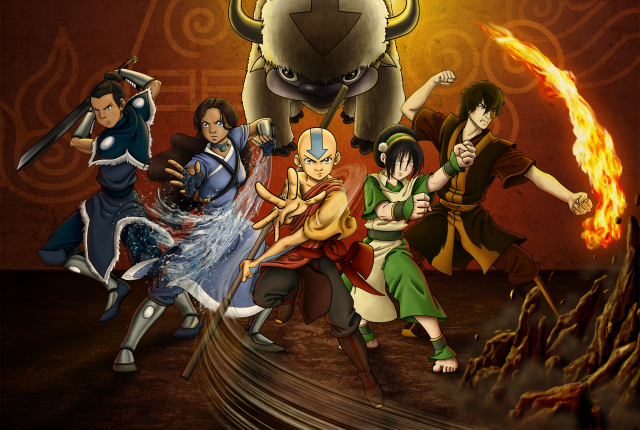
Avatar: The Last Airbender is an animated series that Nickelodeon aired from 2005 to 2008 that draws heavily from Asian mythology and Anime style. It’s easy to dismiss this as another Pokemon or Yu-Gi-Oh! or just another goofy Japanese import for little kids. While definitely in that vein, it is an American production that tells an epic tale with terrific characters existing in a world that’s both unique and plays homage to cultures of the past.

Created by Michael Dante DiMartino and Bryan Konietzko, Avatar is set in an Earth-like place (is it the past or the future?) where humans have broken into four nations: Earth, Water, Fire, and Air (the 12 astrological signs are subdivided into these elements). Each of these people have distinctive cultures, and certain members of their tribes have an ability to “bend” their designated elements–that is, control them. Earthbenders can manipulate the ground and soil, Waterbenders move water in all its forms at their command, Firebenders control energy, and Airbenders have power over the winds. Among these benders, the one person who can command all four elements. This person is reincarnated over the centuries, but the most recent one, a 12-year-old Airbender named Aang, disappeared 100 years ago. During that time, the Fire nation attacked the other three to take control of the world. They wiped out all of the Airbenders and are still at war with the Water and Earth nations by the time the series begins.

In the first episode, teenaged Water tribe brother and sister Sokka and Katara discover Aang and his flying bison-manatee Appa (that is like a cousin to Falkor from The Neverending Story) frozen in an iceberg. Upon being rescued, Aang learns all that transpired during the century that he was gone. He had just found out that he was the Avatar before running away from his responsibilities before being trapped in the ice, so he has not yet learned the other arts despite being a proficient Airbender. He must journey to the North Pole to learn Waterbending from a master who lives there. Katara, a novice Waterbender herself, and Sokka, struggling with the desire to become a leader and a warrior, join Aang in his adventure. Along the way, they pick up a lemur-bat named Momo. During the second season, a fourth human is added to the group, a little blind girl with a tough attitude named Toph who is the world’s best Earthbender. They are in a race against time, as Aang must become adept at Waterbending, Earthbending (the polar opposite of his natural Airbending skills), and Firebending before a comet arrives, giving the Fire Lord even more power.

They are pursued by Prince Zuko of the Fire nation, who was banished three years ago by his father, the Fire Lord. He carries the scar on his face from his confrontation with his father, and must retrieve the Avatar to regain his honor. He travels with his Uncle Iroh, who uses humor to guide him on his own journey of self discovery. However, he is in competition with Admiral Zhao, who uses his considerable resources to stop Zuko and catch Aang himself. Later, Zuko’s sister Azula and her two female companions become the primary antagonists and prove to be formidable foes.

For a children’s show, the characterization is very complex. Tragedy hangs over the heroes and anti-heroes alike–Aang’s entire people have been long since wiped out; Katara and Sokka’s mother was killed in a raid by the Fire Nation and their father has been gone for two years fighting the war; Zuko’s father turned his back on him and his mother disappeared three years previously. They all have parent issues, either wanting to avenge a loss or seeking approval. They can act heroic and petty, sometimes at the same time. They make mistakes. They learn. They grow. We cheer their successes and feel heartbroken at their failures. This aspect of character development over the run of the show is somewhat expected in some adult series, but is highly unusual in children’s entertainment.
 The series itself is broken into three “books,” one per season corresponding with the three elements that Aang must learn to conquer. Each season has its own overarching quest that builds onto the total story, and by the end of Book Three: Fire, the story concludes in a spectacular fashion. Not to give away specific spoilers, but the structure is not unlike the original Star Wars trilogy in that Book One ends with a victory, Book Two has a melancholy cliffhanger, and Book Three goes all out with its definitive ending to the story. It is very satisfying.

During the adventures our heroes endure, we are introduced to a wide range of settings including an icy fortress, an underground labyrinth, a mountaintop palace, a volcanic prison, a swamp made up of a giant life-giving tree (rather similar to another Avatar made a few years later), a cavernous library swallowed by a desert, a cliff-hanging temple, and many more amazing visuals. Additionally, we meet many supporting characters who inhabit these locals (the most terrifying being a creature that literally steals faces from anyone who displays emotions). These seemingly guest characters are all important to the overall plot, even if it’s not apparent at the time, and most end up returning in critical ways by the end of the series. The only problem is that there are so many of them, that it’s sometimes difficult to remember exactly who they are when they re-appear after an extended absence. For this reason, the series needs repeated viewing just to assimilate all the complexities. In this manner, it’s like a kid’s version of Lost.

Like any filmed entertainment, The Last Airbender is not perfect. Too often (especially in the third season, apparently to counteract the increasing darkness of the show), the normally wonderful animation style degenerates into the goofy Anime-ish expressions when the characters show strong emotions like rage, shock, or exasperation (though the blushing cheeks when the characters become embarrassed is a nice touch). There is also a tendency to pander to the young audience with silly sound effects like tinkling when someone sneaks along on tiptoe. Given the amount of action (which is quite often amazing to behold), the animators are careful with the onscreen violence. People hurl fireballs, shards of ice, and various sharp weapons at their foes; characters plunge from astronomical heights; armies wage battles on grand scales. Under these circumstances, it would seem that death would be all around, yet the fighting (even using non-magical fists) rarely results in injuries. This A-Team way of treating violence as non-lethal may be as psychologically damaging to an impressionable young mind as showing the logical outcome, but that’s the way of children’s programming. The irony is that the series acknowledges death as a reality and talks about (though never shows) people having died.

Regarding the fighting that takes place, it’s interesting to note that each of the four nations use different techniques with their bending, each one taken from specific martial arts: Airbending is based on the Ba Gau style of martial arts with Hsing Yi thrown in for good measure; Firebending is based on Northern Shaolin style of kung fu; Earthbending is based on Hung Gar style of kung fu; and Waterbending is based on the Yand style of T’ai Chi Ch’uan. The show’s creators did their homework when any flailing arm and feet movements would have sufficed in a lesser series. This attention to detail also translates into the cultures depicted, which immerses the series into Asian architecture, wardrobe, food, and general lifestyle–though its variety from Japanese to Chinese to Inuit is lovingly explored. This is a wonderful way for American kids to be exposed to something different than the Western lifestyle.

The animated Avatar won seven awards, including an Emmy, and was nominated for four others. The show has amassed a huge fan base composed of people from all ages. Excitement grew when it was announced that the beloved series was coming to the big screen with a live-action adaptation directed by M. Night Shyamalan. However, faster than you can say “Jar Jar Binks,” audience anticipation turned to anger when The Last Airbender hit the theaters (the word “Avatar” was removed from the title to prevent confusion with the James Cameron extravaganza). Fans were outraged by the way Shyamalan (who wrote, produced, and directed) condensed the entire first season into a 103-minute running time as well as alleging racism because the ethnicity of the characters were changed. Even the critics agreed, giving the film a Rotten Tomatoes score of 6%. Shyamalan’s goal of making a trilogy seemed stalled when the film, budgeted at $150 million, brought in $131 million domestically (though to be fair, it made a total of nearly $320 million worldwide).

So is the movie really that terrible? If you’ve never seen the TV series, you may enjoy the fantastical elements and adventure because you don’t know what you’re missing. But if you’re a fan, you’ll see everything that was cut out or randomly altered. The movie is a hollow shell of the TV series, a Cliff Notes version of the story that hits the highlights without ever getting to the heart of what makes Avatar work. Even so, it does have some good things going for it. Despite its five Razzies, it was not the worst movie ever made. Let’s do a comparison of the two versions of Airbender.


Fans were so incensed when they found out that the Waterbenders were played by white actors when they are dark skinned in the TV series. Shyamalan seemed to apply his own racial preferences on the characters, but is it fair to accuse him of racism? In the TV show, each of the nations had very specific cultures based on various Asian societies:
The film actually broadened the racial structure beyond just Asian, though one has to wonder if the main characters were played by white actors due to studio pressures. The movie broke down the nations as such:
Movies are adaptations of the source material and the filmmakers can interpret the material any way they wish, though if they make too many changes, it can alienate fans of the original. One of the strengths of the show was the way it delved into a fantasy version of Asia, so it’s understandable why people were upset. However, with Shyamalan being Indian, it’s also understandable why he chose to bring this Asian influence into the film. The problem, of course, is seeing fan-favorite characters with dark complexions suddenly being pearly white on the big screen. But if the film was to expand on its cultural representation to include all races, should Caucasian be excluded? Of course, an argument can be made that if all races were to be shown on screen, why is there only fleeting shots of a single black actor? The next issue is the fact that the heroes are pale skinned while the villains (of Indian descent) are darker. It’s too bad that Shyamalan didn’t reverse the Water and Fire Nations. It would have been interesting to see Dev Patel as Sokka instead of Zuko.

Any time you adapt a work into film, whether the source material is a book, TV series, play, graphic novel, or video game, the filmmakers must take certain liberties to transform it to be cinematic. The essence of the story must be kept in place and the spirit of the original must be captured, but put into a succinct, entertaining two-hour (or so) package. Some details need to be condensed or omitted. Look at the Harry Potter series and how screenwriters Steve Kloves and Michael Goldenberg were able to streamline massive books with multiple subplots into straightforward stories for the big screen. While some fans griped about elements missing, the movies still seem cohesive and usually do not feel like they jumped over important information. This is what The Last Airbender did, but failed miserably.

Each episode of the TV series was an individual chapter within the “books” that made up the seasons. The film was an adaptation of the first season, labelled “Book One: Water.” The chapters were done in a somewhat episodic nature, though they built into the overall storyline. While some seemed to be just filler, some elements such as characters or locations became important later. Other times, a plot point is introduced that carries over to the next episode. Many times, the importance of these elements are not truly shown until season two or three. Sometimes an episode exists just to develop the characters. The challenge is to take 20 22-minute episodes and condense them into a movie that would only be roughly a third of the length–and to have it make sense.

It’s really too bad that Shyamalan didn’t hire show creators DiMartino and Konietzko to write the screenplay. After the disaster of a story that was The Happening, the director needs to learn how to collaborate in order to get the most out of a good concept. He seemed to randomly grab elements from the first season and throw them together with little regard to how they wove together in the film. Also, as many critics pointed out, the entire story felt like exposition. It’s great to discover new things as the film unreels, but you have to set up the rules in Act 1 and then let the story play out without overwhelming the audience with new information that would just confuse them. For instance, in the last three episodes of Book One, our heroes find themselves with the Northern Water tribe, where Sokka falls in love with Princess Yue. She is fated to sacrifice herself and become the Moon Spirit. The mythology surrounding the Moon Spirit is explained in these episodes, which serve as the climax to Book One. Within the context of a single episode, it’s okay to deal with a concept that’s new to the series. In the movie, this is handled in the last 40 minutes (their love story is reduced to Sokka volunteering to protect her upon first meeting her). As the film is moving toward its conclusion, we now have to grasp understanding the mumbo-jumbo about the fish that are the living representations of spirits. Does anyone really care? We should be more concerned with wrapping up the story at this point in the film.

The movie clocks in at a relatively short hour and forty minutes, which reduces the amount of time to develop the plot. It could have easily been over two hours long by fleshing out things that are just stitched together. Young audiences are willing to sit through long movies (again, look at the Harry Potter films) as long as they’re engaging and entertaining. What is really missing, though, is character development. Despite the fact that the characters talk a lot, most of it is explaining what’s going on. Rarely do we see the characters acting as unique human beings, which is a strong point of the series. Too often, important information about the characters are explained with a passing line. Shyamalan forgot the most basic tenant of storytelling–show, don’t tell. This also hurt the characters in the fact that none of them resembles those of the TV show. They are all too somber and serious, even those who are supposed to be the comic relief. Shyamalan treats the mythology as sacred rather than having fun with it, thereby allowing the audience to have fun.

He also seemed to forget how to structure a film. Act 1 introduces the characters, setting, and conflict. He does these things in The Last Airbender, but in a very rushed manner. Nothing feels organic. Zuko’s introduction, for instance, almost seems like an afterthought, as if Shyamalan knew he had to have Zuko there, so he just threw him in. The second half hour was just some random scenes that in no way felt like the plot was thickening–again, it was more exposition thrown at us. We briefly see an Earthbending village. Aang is captured and then Zuko frees him dressed as the Blue Spirit, which happens in Chapter 13 in the TV show. Why does this happen so quickly in the film? Because Shyamalan needs to include it, and there’s no time to do it later. The turning point in the story at the hour mark had the heroes reaching their destination at the North Pole, which should be in Act 3. Essentially, the filmmaker took the first three episodes and the last three episodes for most of the movie, cramming details from the other 14 episodes into the middle half hour of the movie. The journey was the fun part of the series and where most of the theme and character development happened.

Here’s how the film’s plot should have played out:
Act 1 – Take a cue from Lord of the Rings and Star Wars and use a pre-title sequence to explain the back story and rules of the benders. Even the TV series did this in its opening credits. Bring the audience up to speed, then start the show. Katara and Sokka find Aang and Appa in the iceberg and bring them back to their village. Allow Aang to play and show that he’s a normal kid. This is important in the fact that he must grow serious by the end of the film. Let the audience get to know him and actually like him. Show Katara and Sokka’s personalities as they get to know him. Reveal the fact that he’s the Avatar once his personality is established rather than right away. Meanwhile, introduce Prince Zuko and his goal, plus his relationship with Uncle Iroh and General Zhao. They zero in on Aang, who struggles with his role as the Avatar. He goes to his temple, finding his people long dead. He now realizes that he must journey to the North Pole to learn Waterbending from a master, and Katara and Sokka go with him. The Firebenders are on their tale.
Act 2 – Here’s where we need to have their epic journey with the relationships between Aang, Katara, and Sokka developed. Obviously, not every episode from the show needs to be included, but we need to see the world in which they live. Let the audience be awed by the variation of cultures and settings. In the first half of season one, the heroes visit a couple different Earth Nation cities while Katara tries to improve her Waterbending skills. While the movie does show an Earthbending town, it has little impact. Let’s see the city of Omashu, where Aang meets his now-elderly childhood friend who has become an eccentric King. Let’s meet the female Kyoshi warriors with Sokka getting a crush on the leader, Suki. Of course, all the while we have our Fire Nation antagonists chasing down the protagonists. However, we need to see the struggle that Zuko is going through trying to both redeem himself in his father’s eyes and competing with the movie’s true villain, General Zhao. Iroh tries to train Zuko, who is so focused on his goal that he does not listen to his elder. The first half of Act 2 needs to culminate with Aang’s trip to the spirit world, where the former Avatar, Roku, informs him that he must learn all three elements before a comet arrives. This now ramps up his need to reach his destination in a timely manner.
The second half of Act 2 has to build the intensity of both the journey of the heroes and the quest of the villains. If the first part focused on Earth Nation, the second part needs to spend time with the Fire Nation. After a run-in with pirates, Katara gains possession of an ancient scroll that teaches Waterbending, so she and Aang try (with frustrating results) to improve their skills. Aang is captured by General Zhao, but Zuko puts on the Blue Spirit mask and rescues him so he can turn the Avatar in himself; however, he is wounded during the escape and Aang must save him. The episode featuring this incident has a nice scene where Aang asks Zuko if they could ever be friends (the line was moved to the end of the movie as a throw-away). This is important because it establishes that Zuko may not be all bad. The next step on their journey has the heroes meet a group of young rebels led by the charismatic Jet, who wants to destroy a Fire Nation village, thereby killing everyone including children. Aang and his companions prevent this from happening.
Act 3 – Finally, Aang, Katara, and Sokka reach the Northern Water tribe. Aang is trained by the master while Sokka romances Princess Yue. Katara is prevented from being trained because she is a girl, but stands up for herself. General Zhao amasses his navy to attack the Water Nation while Zuko and Iroh sneak in. The epic battle ensues. Princess Yue turns into the Moon Spirit, which General Zhao tries to destroy. Zuko confronts Aang, but fails to capture him. Instead, Aang uses his Avatar powers to destroy the Fire Nation ships (he only threatens them with a static tidal wave in the film). After the battle, Aang now is tasked with learning Earthbending and Firebending, with Katara named his Waterbending teacher. We’re now ready for Book Two.

If the film did a poor job adapting the plot, how well did it handle the characters? Not very well, unfortunately. As previously stated, none of them resembled what they did in the TV show, at least in their personalities. Here’s how the two versions compare:
Aang

TV – Voiced by Zack Tyler Eisen, Aang is a fun-loving kid who laughs and plays a lot, often to the consternation of his companions. He especially enjoys creating an air bubble that he sits on and rides. He is a normal 12-year-old who is burdened with a heavy responsibility that he is not ready for. During the course of the journey in the entire series, he matures and becomes serious but spiritual like the monks he had lived with during his formative years. He gets frustrated when he is unable to master Earthbending (the opposite of Airbending), yet shows off the other skills he masters. He is capable of losing his temper, but he is also compassionate and unwilling to take a life (he is even a vegetarian). His morals is his driving force in life. Aang also has a crush on Katara, though doesn’t act upon it in Book One.

Film – First time actor Noah Ringer was chosen because of his considerable martial arts skills and the fact that he looks exactly like Aang. As with the other actors, much was made of the fact that he’s white and not Asian (he’s actually of Native American descent), but the character is pretty pale and his physical features are pretty generic, racially speaking. Ringer is perfect casting. A lot of critics derided his acting ability, but as his performance in Cowboys & Aliens shows, the kid can act. It’s just that the role is so underwritten, that he has nothing to do but look grim when he’s not displaying his amazing martial arts talent. From the moment Aang is thawed out, he is serious and not playful, which undermines his whole character. He may have cracked a smile twice in the entire film, and possibly even laughed in the background of a flashback. As is shown in a behind the scenes video, Noah Ringer is a prankster with an infectious laugh. If he was allowed to show some of his real personality on film, the character of Aang would have been much truer to his origins.
Katara

TV – Voiced by Mae Whitman, 14-year-old Katara is serious, sensible, and motherly. She is the last of the Waterbenders from her village, but because she has no mentor, she struggles with learning the skill on her own. Through the course of Book One (especially with help from the stolen scroll), she is able to master Waterbending enough to become Aang’s instructor, even if she got jealous of his ability to pick up this talent with apparently no problem. She misses her mother, who died protecting her during a Fire Nation attack, and harbors resentment for her father, who has been away at war for the past two years. She tolerates her brother’s antics and is somewhat oblivious to Aang’s affections for her since she looks at him more as a little brother than a love interest (that changes). By the second season, she is a formidable force as a powerful Waterbender.

Film – The very pale Nicola Peltz assumes the role and does an okay job with–yet again–an underwritten role. She’s the one character that should be serious, and the actress gets that right. However, any other nuances in the character is missing. Nothing is said of Aang’s crush (or her reaction to it), she never meets any other character from the TV show (like Jet, the leader of the rebel kids) with whom she has any emotional attachment, she has no conflict with the Waterbending master (who isn’t even in the film–Princess Yue’s father takes over this role), and any struggles she has with learning the skill is barely mentioned. She’s essentially there to be the girl in the adventure and not much more.
Sokka
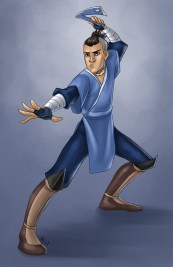
TV – Voiced by Jack DeSena, skinny 15-year-old Sokka is possibly the most complex characters on the show in addition to being the comic relief. As the oldest child in the village, he must act responsibly but resents the fact that he was too young to join the men when they went off to war. He wants to make his father proud by proving himself as a leader and a warrior, . As with Katara, though, he has no one to teach him how to do this, so he often makes mistakes. He has no bending abilities, so is often the odd man out during their adventures, but he does not back down from a battle. He has a sharp-edged boomerang that he puts to great use. His biggest character trait, though, is his sense of humor. He often cracks witticisms that annoy Katara but entertains himself. He and Aang often play juvenile games that end with them flicking each other or giggle at things that boys their ages find funny (such as the word “buttress”). Just like Aang and Katara, he grows through the course of the series (even finding himself a mentor to teach him sword fighting). He truly becomes a leader, devising battle plans and using intelligence to overcome adversity.
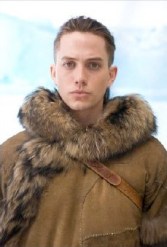
Film – Jackson Rathbone, who was 26 when The Last Airbender was released, plays Sokka. Needless to say, he looks no more like a scrawny 15-year-old than he does Inuit. He also has no wit, sarcasm, or humorous actions. Instead of being the comic relief, he is just the other guy along for the ride. The character is stoic throughout the film with no hint at any internal struggle. The actor himself is bland, especially considering the role is supposed to be lively and fun. Miscast and badly written, Sokka is one of the greatest disappointments in the movie.
Zuko

TV – Voiced by Dante Basco (who most people will remember as Rufio in Steven Spielberg’s Hook), 16-year-old Firebending Prince Zuko is driven by his obsession to find the Avatar and bring Aang to his father, the Fire Lord, to win his approval. Three years before, Zuko voiced his disapproval of the plan of using soldiers as a sacrifice during battle, causing his father to challenge him to a duel that resulted in Zuko being scarred and banished. In Book One, he is pretty much the primary antagonist, with just hints that he will eventually change to become one of the good guys (which doesn’t happen until half way through Book Three). There is a massive internal struggle within him because he wants to do good, but is controlled by his need for paternal approval, that will probably never come. His dressing as the Blue Spirit and rescuing Aang is important because even though he did this for selfish reasons, it showed that he has the guts to stand up against his own people and also hints that he and Aang could be more than enemies. His relationship with his uncle is complex as well, since he looks at the old man as a mentor and the father he never had while simultaneously not taking him seriously. His ambiguous nature makes him one of the strongest characters on the show, and his ultimate change of heart is one of the most satisfying elements of the series.

Film – Slumdog Millionare‘s Dev Patel, who at least is young enough to play a teenager, portrays Zuko. For once, the character is actually written fairly close to his TV counterpart. Patel does a good job capturing the obsession and fervor of the character. Unfortunately, there’s not much more to the character as written. We get that he’s in turmoil, but his relationship with his uncle is one-note, and no other subtlety is even implied. His performance could have been so much better if given the proper material to perform.
Uncle Iroh

TV – Wonderfully voiced by veteran actor Mako, Iroh is a Yoda-like mentor to Zuko. He is the Fire Lord’s brother, a retired Fire Nation general who was actually in line for succession to the title of Fire Lord, but was usurped. This apparently doesn’t bother him, however, as his goal in life now is to operate a tea shop. Tea is his great love, and he drinks it as often as he can. He also enjoys a board game using little tokens, one of which is a symbol of a secret organization that he belongs to. He has a genial manner and often comes off as the goofy sidekick when he has a lot of depth to him. He lost his son in the war and has taken on Zuko as a surrogate, and constantly challenges him to make the right decisions and do good, and is saddened when the impetuous teenager screws up. Mako died during the recording of the second season (there was a really sweet episode that was dedicated to him), so in Book Three, the show’s creators wisely had him remain silent through many episodes (which actually served the story) and was missing from a good portion of the season. When we did hear him speak again, the character was performed by Greg Baldwin, doing a passable impersonation of Mako.

Film – Shaun Toub played the character with–you guessed it–seriousness. In no way did he physically resemble the animated Uncle Iroh, being tall and thin rather than short and pudgy and having sporting long hair. Gone is any sense of whimsy or wisdom, replaced with somber stoicism. At least the movie acknowledges that his son died and he has “adopted” his nephew, so there is some connection between them. But the contrast of the characters in the show is not present in the film, which is the audience’s loss.
General Zhao

TV – As the true villain of Book One, General Zhao was modeled after the character of Colonel William Tavington in The Patriot, so who better to do the character than the actor who played Tavington? Jason Isaacs’s voice has gravitas that drips with menace. He is ambitious, cruel, and immoral, wanting to secure his place in the Fire Nation military by destroying the Avatar and crushing the other nations. He meets a fitting end at the end of the first season.

Film – Who better to follow Jason Iassac’s footsteps than…Aasif Mandvi from The Daily Show? Who in their right mind thought that this squeaky-voiced comedian had the screen presence to play such a forceful, villainous character? While he is appropriate as one of Jon Stewart’s correspondents, but in this fantasy adventure, he’s entirely wrong. Not only does his casting eliminate all threat the character posed, thereby undermining the entire dramatic conflict in the film.
Fire Lord Ozai

TV – The ultimate villain of the series is actually hidden from view during the first two seasons (much like Emperor Palpatine, Sauron, or Blofeld), though we hear his voice as done with flair by Mark Hamill. We only his hand or the back of his head so there is a menacing mystery surrounding him. When he is finally shown in Book Three, he resembles his son Zuko, though with a long beard. To some degree, finally revealing him humanizes the Fire Lord rather than keeping him as a concept of evil. He’s still a horrible human being, make no mistake, but we finally see him as a character. His final battle with Aang in the four-part series finale rivals some of the epic showdowns of fantasy entertainment.

Film – He’s a guy. That’s it. Played by Cliff Curtis, there is no threat or grandeur. We know he’s Zuko’s father and Iroh’s brother and he’s the leader of the Fire Nation. Other than that, he pretty much sleepwalks through the film. Showing him on screen is a huge mistake, and it makes one wonder if M. Night Shyamalan actually watched the series before writing the screenplay.
.

While the series is firmly rooted in the tradition of anime, the animation is done extraordinarily well and is accessible to viewers who are not normally drawn to that style. In particular, the many action scenes are thrilling and actually have a sense of danger. Given the concept of the show, most of the fighting is done using magical abilities rather than hand-to-hand, though there is some sword play and fisticuffs at times. Being a children’s show, the most harm done is that someone is knocked out, and even in situations where in reality the characters would be killed, we see that people are generally unharmed. The main irritation, though, is that on occasion during fighting scenes, the characters fly through the air with streaks behind them rather than the actual background moving. This technique is often done in anime, and while some people like it, it’s a lazy way of showing action. The bending styles, based on various martial arts, have a reality to them that grounds the fantasy elements. The animators did a good job capturing the movements and making each bending stand on its own.

Shyamalan has never done a special effects action movie to this point in his career, so it was interesting to see how well he handled it. For the most part, he is effective. Many times, true to his personal directorial style, action happens within the frame without the camera focusing on specifics, so the events seem to happen on their own rather than feeling staged. A lot of work went into the choreography, and in particular Noah Ringer is amazing to watch. In particular, there’s a scene where Aang and Katara practice, and it’s shot with quiet elegance. However, it’s unclear if the film kept true to the series in which martial arts applies to which element. Also, the movements seem overblown. While the entire body is used when bending in the TV show, the movements are fluid and graceful. In the film, too often an overly complicated routine is used to do the magic. In one scene, Earthbenders stomp on the ground in unison, which looks really silly. The battles all too often look like people play fighting rather than really trying to do harm to one another. It’s like the background extras were told to clash swords, but don’t actually make any threatening motions. That undermines the urgency of the film, as if the filmmakers just said, “Reality doesn’t matter because it’s just a movie for kids.” Lesson learned from Harry Potter–kids can handle it when characters on screen face real threats to their lives.
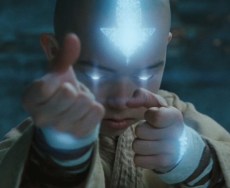
The biggest disappointment, though, comes in the climax of the film. It’s essentially a remake of the season one finale of the show, but for some reason has less of an impact. One change is understandable–in the show, Aang becomes a giant water fish that wipes out the Fire Nation ships. On film, that probably would not work well because the visuals would be outlandish. Instead, he creates a wall of water that threatens the ships, making them turn around and head out to sea. This is a lackluster ending to a talky, bland movie.


As was previously stated, The Last Airbender is not totally horrible. The production design is effective, even if the story lacks many of the imaginative locations of the series. What we do see is done fairly well, in particular the Northern Water tribe’s ice palace. This also applies to the costumes, which differed from the series but were still well designed. The movie is also filmed with nice cinematography. Even though Roger Ebert complained about the converted 3D and its inherent murkiness, the 2D version is bright and clear. The music by long-time Shyalaman collaborator James Newton Howard is grand and enjoyable, though it would have been nice to see what series composers Jeremy Zuckerman and Benjamin Wynn could have done on a feature film budget since their music for the show is wonderful. It’s evident that a lot of effort was put into the production values of the film, and M. Night Shyamalan seemed to want to do something special with this adaptation, but unfortunately he went about it in a seemingly clueless manner in regards to the story and characters.

The animated adventures of the Avatar continues with the new Nickelodeon series The Legend of Korra, which premiered Saturday, April 16. Set 70 years after the original show, this story follows the new Avatar, an impetuous teenage girl named Korra (Janet Varney) who is adept in Firebending, Earthbending, and Waterbending, but for some reason cannot command Airbending. She goes to Republic City, which was founded by Aang, in order to learn Airbending from Aang’s son Tenzin (J.K. Simmons). She becomes involved with a sport called Probending, where she teams with brothers Bolin (P.J. Byrne) and Mako (David Faustino). An anti-bending movement grows, led by a mysterious character named Amon. The culture has become modernized with automobiles and radios, and the city has glass and steel skyscrapers. The conflict of The Last Airbender was that the Nations were at war, but in The Legend of Korra, they are peacefully co-existing with the threat of everything our initial heroes built could be destroyed. It will be interesting to see how this new mythology unfolds.
copyright © 2012 FilmVerse
According to Box Office Mojo, there are 87 directors whose collective films have earned over a billion dollars worldwide, yet many of these directors live in obscurity while others have become celebrities thanks to their film careers. The so-called “brand name” filmmakers have a large following and are generally household names: Steven Spielberg, George Lucas, James Cameron, Tim Burton, Michael Bay, Quentin Tarantino, and so forth. Some directors who only have a few movies to their names are marketed as commodities, such as J.J. Abrams, Bryan Singer, Jon Favreau, and Judd Apatow, while others like Bret Ratner, McG, Zack Snyder, M. Night Shyamalan, and David Yates have to live down a perceived bad reputation among fans. “Brand name” directors might have distinctive visual styles, had fame previous to becoming directors, or have become infamous due to the films they made. In all cases, their names have become known as much as their films or are synonymous with a genre of film.
What’s the difference between a “brand name” director and one who is successful yet remains mostly anonymous? One litmus test is in the advertisements for an upcoming movie–if it screams the director’s name, then they’re cashing in on the fact that everyone knows this person, but if it just says “from the director of [insert previous hit movie here],” then the director has yet to reach celebrity status despite his or her box office success. During the movies, their names flash by on screen (usually twice) and are promptly forgotten by the audience. By looking at these directors and their filmology, it is surprising what movies have contributed to a billion dollars earned in ticket sales around the world.

$1,011,461,528 worldwide gross box office receipts*
$563,321,488 domestic gross box office receipts adjusted for ticket price inflation
Films directed:

$1,011,461,528 worldwide gross box office receipts
$571,811,414 domestic gross box office receipts adjusted for ticket price inflation
Films directed:

$1,050,194,839 worldwide gross box office receipts
$804,662,000 domestic gross box office receipts adjusted for ticket price inflation
Films directed:

$1,057,246,027 worldwide gross box office receipts
$786,322,800 domestic gross box office receipts adjusted for ticket price inflation
Films directed:

$1,085,700,314 worldwide gross box office receipts
$774,428,153 domestic gross box office receipts adjusted for ticket price inflation
Films directed:

$1,128,870,346 worldwide gross box office receipts
$635,351,700 domestic gross box office receipts adjusted for ticket price inflation
Films directed:
.

$1,133,442,151 worldwide gross box office receipts
$522,061,568 domestic gross box office receipts adjusted for ticket price inflation
Films directed:

$1,157,187,942 worldwide gross box office receipts
$715,894,500 domestic gross box office receipts adjusted for ticket price inflation
Films directed:

$1,169,129,669 worldwide gross box office receipts
$473,183,000 domestic gross box office receipts adjusted for ticket price inflation
Films directed:
.

$1,227,358,789 worldwide gross box office receipts
$463,213,015 domestic gross box office receipts adjusted for ticket price inflation
Films directed:

$1,236,369,967 worldwide gross box office receipts
$614,474,034 domestic gross box office receipts adjusted for ticket price inflation
Films directed:

$1,256,709,341 worldwide gross box office receipts
$660,553,600 domestic gross box office receipts adjusted for ticket price inflation
Films directed:
.
.

$1,262,602,036 worldwide gross box office receipts
$568,918,446 domestic gross box office receipts adjusted for ticket price inflation
Films directed:

$1,285,182,106 worldwide gross box office receipts
$512,402,513 domestic gross box office receipts adjusted for ticket price inflation
Films directed:
.

$1,308,338,888 worldwide gross box office receipts
$584,043,000 domestic gross box office receipts adjusted for ticket price inflation
Films directed:
.

$1,343,244,274 worldwide gross box office receipts
$568,649,082 domestic gross box office receipts adjusted for ticket price inflation
Films directed:
.

(Not to be confused with the director of Cloudy with a Chance of Meatballs and 21 Jump Street)
$1,347,918,666 worldwide gross box office receipts
$516,542,100 domestic gross box office receipts adjusted for ticket price inflation
Films directed:
.

$1,352,883,090 worldwide gross box office receipts
$812,026,200 domestic gross box office receipts adjusted for ticket price inflation
Films directed:

$1,458,466,790 worldwide gross box office receipts
$577,870,400 domestic gross box office receipts adjusted for ticket price inflation
Films directed:

$1,521,040,539 worldwide gross box office receipts
$529,995,300 domestic gross box office receipts adjusted for ticket price inflation
Films directed:

$1,530,213,382 worldwide gross box office receipts
$971,068,100 domestic gross box office receipts adjusted for ticket price inflation
Films directed:

$1,541,960,650 worldwide gross box office receipts
$1,202,846,900 domestic gross box office receipts adjusted for ticket price inflation
Films directed:

$1,565,854,352 worldwide gross box office receipts
$1,170,332,400 domestic gross box office receipts adjusted for ticket price inflation
Films directed:

$1,566,890,302 worldwide gross box office receipts
$545,042,900 domestic gross box office receipts adjusted for ticket price inflation
Films directed:
.

$1,579,784,400 worldwide gross box office receipts
$929,912,200 domestic gross box office receipts adjusted for ticket price inflation
Films directed:

$1,598,108,021 worldwide gross box office receipts
$1,359,079,700 domestic gross box office receipts adjusted for ticket price inflation
Films directed:

$1,618,741,562 worldwide gross box office receipts
$1,369,577,300 domestic gross box office receipts adjusted for ticket price inflation
Films directed:

$1,644,659,185 worldwide gross box office receipts
$738,419,000 domestic gross box office receipts adjusted for ticket price inflation
Films directed:

$1,662,146,756 worldwide gross box office receipts
$967,447,200 domestic gross box office receipts adjusted for ticket price inflation
Films directed:

$1,682,533,409 worldwide gross box office receipts
$1,193,298,000 domestic gross box office receipts adjusted for ticket price inflation
Films directed:

$1,735,088,372 worldwide gross box office receipts
$1,148,998,300 domestic gross box office receipts adjusted for ticket price inflation
Films directed:

$1,813,022,353 worldwide gross box office receipts
$777,366,000 domestic gross box office receipts adjusted for ticket price inflation
Films directed:

$1,899,192,701 worldwide gross box office receipts
$924,407,200 domestic gross box office receipts adjusted for ticket price inflation
Films directed:

$1,938,917,818 worldwide gross box office receipts
$1,070,177,300 domestic gross box office receipts adjusted for ticket price inflation
Films directed:

$2,568,926,659 worldwide gross box office receipts
$1,434,786,600 domestic gross box office receipts adjusted for ticket price inflation
Films directed:
.

$2,670,686,201 worldwide gross box office receipts
$973,682,400 domestic gross box office receipts adjusted for ticket price inflation
Films directed:

$2,941,447,665 worldwide gross box office receipts
$1,577,462,900 domestic gross box office receipts adjusted for ticket price inflation
Films directed:
.
The following “brand name” directors all have earned over a billion (in some cases two or three billion) in worldwide box office:
NOTE: Woody Allen barely missed this list with an estimated worldwide gross of $920,000,000, but data on several of his films is missing, so it is possible that he also broke a billion dollars and would therefore be number 50.
*All dollar figures were taken from Boxofficemojo.com. Worldwide grosses were determined from adding unadjusted domestic grosses with worldwide grosses provided. Not all motion pictures had worldwide figures.
copyright © 2012 FilmVerse
1057246027
 FilmVerse