3 Comments

Films Credited to the Producer, Not the Director

In many ways, motion picture directors have become as much of a star as the lead actors who appear in their movies.  It doesn’t matter much who stars in films by Steven Spielberg, James Cameron, or Tim Burton, because the audience has brand name recognition with those directors and has certain expectations from their films.  The director is the creative force behind a movie, making decisions regarding the acting, cinematography, art direction, costumes, editing, and every other element that appears on screen.  It must be frustrating, therefore, when a director does not receive accolades for their work, but instead the movie is credited in the eyes of the movie-going public to the producer.  This has happened more than once, and history does little to change this perception.

The Thing from Another World (1951)

John Carpenter hit a high point in his career directing a remake of Howard Hawks’ The Thing from Another World, about a group of scientists trapped in the Arctic with a thawed-out alien that wreaks havoc on their outpost.   The problem is that the original was not directed by Hawks, but by Christian Nyby–or was it?  Hawks took no credit in co-writing the screenplay and apparently set Nyby up as the director so his long-time editor could join the Director’s Guild.  This was Nyby’s first directing credit, and he went on to work almost exclusively in television with the exception of a couple forgettable feature films.  Even among the cast and crew of Thing, there were varying reports of who exactly directed.  Hawks took a producing credit, but it’s clear that his influence was strong, as it fits in with the style and theme of his previous works.

Around the World in 80 Days (1956)

Powerhouse producers like Jerry Bruckheimer and Brian Grazer have been around for as long as the movie industry has been in existence.  One example is Mike Todd, who put on sometimes controversial Broadway shows before pushing the widescreen Cinerama process and Todd-AO into movie theaters.  Spectacle was the name of the game with this producer, trying to draw people away from the burgeoning TV landscape and keeping them buying movie tickets.  One such film that he made was Around the World in 80 Days, for which he took full credit, using his name in the possessive form on all the marketing material.  In reality, the film was directed by Michael Anderson, who later went on to direct Logan’s Run.  But considering that the Michael who’s name was above the title was Todd and not Anderson and that it was released in Todd-AO, is it any wonder that people forgot who the actual filmmaker was?

Kidnapped (1960), The AbsentMinded Professor (1961), Mary Poppins (1964)

Walt Disney knew a thing or two about how to market his films, and was probably the most successful filmmaker in branding his own name as a product.  He rarely actually took credit personally as a producer, but rather released feature films with the header of “Walt Disney presents”–which was changed to “Walt Disney Pictures presents” after his death.  That’s all people needed to know, that it was a Walt Disney film; it didn’t matter who actually directed it.  One of the most prolific directors who worked for Disney was Robert Stevenson, who had a long list of films and TV shows under his belt before Uncle Walt hired him to make Johnny Tremain and Old Yeller, both in 1957.  He went on to do many other classic (and not so classic) Disney pictures as Kidnapped (from the book by Robert Louis Stevenson–no relation), Darby O’Gill and the Little People, The AbsentMinded Professor and its sequel, Son of Flubber, In Search of the Castaways, The Love Bug, and a little movie called Mary Poppins.  That last film won five Oscars, and Stevenson himself was nominated for Best Director–being the only director of a classic Disney film to receive such an honor.  Yet Stevenson is largely forgotten as a director, being overshadowed by his boss.

Play It Again, Sam (1972)

Woody Allen is a prolific director, churning out an average of one movie a year.  He’s pretty much a one-man band–writing, directing, and often starring in his films.  While most actors in Tinsel Town beg and plead their ways into his films, it’s rare that he acts in films directed by other people.  This is the case with Play It Again, Sam, which most people think he directed.  This came out in the midst of an early streak of comedies–Bananas, Everything You Always Wanted to Know About Sex* But Were Afraid to Ask, and Sleeper.  Based on a stage play that he wrote, Play It Again, Sam was about a man obsessed with Humphrey Bogart’s character in Casablanca.  Allen adapted the play into the film’s screenplay and starred in it, but turned the directing duties over to Herbert Ross, who would later be nominated for an Academy Award for directing The Turning Point.  While Allen was not the actual producer of the film (he never took producing credit for any of the movies he made), it is clear that it is his project.  It usually falls under into the category of Woody Allen films, and not Herbert Ross films (are there any Herbert Ross followers out there?).

The Empire Strikes Back (1980)& Return of the Jedi
(1983)

As any Star Wars fan knows, George Lucas turned the directing duties of his beloved series over to others for the second and third outings, The Empire Strikes Back and The Return of the Jedi–something many argue he should have done for the prequels.  Lucas famously hated the actual process of shooting a movie, preferring instead to handle the pre-production and post production (most actors he’s worked with agree that he should not be calling action).  While taking Executive Producer credit on these two installments, there is no question that he is the creative force behind the films; he developed the stories, oversaw character design, storyboarding, art direction, make-up, editing, and special effects, and even kept a close eye on the directors themselves.  He recruited a former college professor, Irvin Kershner, to helm Empire (a smart move), while the late Richard Marquand took the reins for Jedi.  These two were in reality hired hands carrying out one job on the movies that Lucas delegated while still keeping creative control.

Poltergeist (1982)

As with Hawks and Lucas, Steven Spielberg found himself in a situation where he was making a movie that ultimately he did not direct, yet the creative aspects of the film were all his.  He was in pre-production on two films, E.T. the Extraterrestrial and Poltergeist, but due to scheduling conflicts, he had to back out of one of them.  Considering how much money and accolades E.T. earned, Spielberg chose wisely.  But he wasn’t going to give up completely on Poltergeist; instead he hired Tobe Hooper, who had gained fame directing the horror classic The Texas Chainsaw Massacre while remaining onboard as a hands-on producer.  It was so hands-on that rumors abounded that Spielberg himself was actually calling the shots (he did, after all, co-write the screenplay, design the storyboards, and visit the set quite often).  The Director’s Guild even investigated to see who actually directed.  Hooper’s name is listed as director, but everyone unofficially considers it a Spielberg film.  Compare it to each of the directors’s bodies of work and see which it’s closer to in style and substance.

To Be or Not to Be (1983)

Like Woody Allen, Mel Brooks was a comedic writer and performer who moved from television in the ’60s into film.  His first couple of hits, The Producers and Young Frankenstein, were ones he wrote and directed, but did not appear in.  He took on two supporting roles in the tremendously successful Blazing Saddles before promoting himself to lead in such films as High Anxiety, Silent Movie, and History of the World, Part I (he later decided supporting roles were sufficient in Spaceballs and Dracula: Dead and Loving It while staying out of Robin Hood: Men in Tights completely).  When he starred in To Be or Not to Be, a remake of a Jack Benny comedy set in Poland during WWII, it was assumed that he was also the director since, also like Allen, he was not known to act in other people’s films.  The credited director was Alan Johnson, who had worked with Brooks repeatedly as a choreographer (his only other directing credit was Solarbabies).  In fact, Johnson continued to work as Brooks’s choreographer until his Dracula flop.  Much like the relationship Howard Hawks had with Christian Nyby, perhaps Brooks was just making it possible for Johnson to move into directing under his mentor’s tutelage.

The Nightmare Before Christmas (1993)
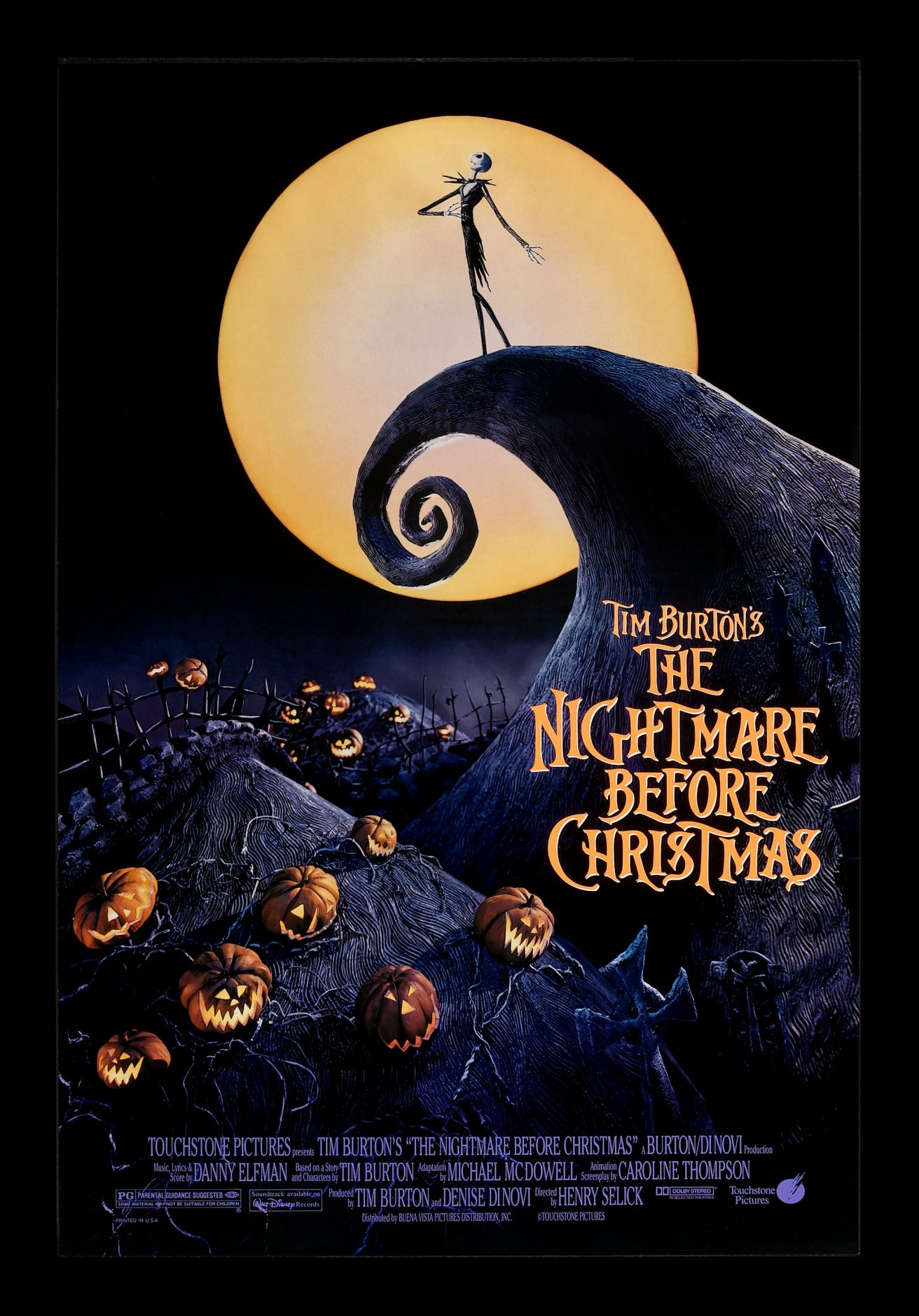
Who else could have directed Tim Burton’s The Nightmare Before Christmas except for Tim Burton?  How about Henry Selick?  As with Star Wars and Poltergeist, this animated classic was a pet project of a filmmaker who turned the directing duties over to someone else.  Burton, who started out as an animator and worked on a couple Disney films, made a successful transition into live action and hit it big with Batman.  With his new-found clout, he was able to put this bizarre stop-motion film into production.  However, the long process of animating figurines was far too much for Burton, who had other movies to direct.  In came Selick, who Burton knew from his days at Disney.  The film was Burton through-and-through; it was his story, he designed the characters, his long-time musical collaborator Danny Elfman wrote the songs and music, and his distinctive visual style effused every shot of the film.  Originally, his name was not in the title, but in the re-issue, Disney’s marketing geniuses thought it would sell more tickets if it seemed that Burton himself “owned” the movie.  In a sense, he did, but Selick was overlooked as the person painstakingly shooting each and every frame.  Fortunately, Selick has had success with James and the Giant Peach and Coraline (but please erase Mokeybone from your memory).

V for Vendetta (2005)

Andy and Larry (now Lana) Wachowski caused a cultural tsunami with The Matrix (though disappointed fans with the sequel), so when they adapted the Alan Moore graphic novel V for Vendetta as a movie featuring similar high-concept visuals and a dystopian future, most fans assumed they were the directors.  However, they wrote the screenplay and produced the film, but allowed their first assistant director from the Matrix trilogy, Aussie James McTeigue, to take the director’s chair.  Unfortunately, marketing departments can’t do much with first time directors, so all the promotional material screamed “from the makers of The Matrix” (which is correct, since McTeigue did participate in the making of that film).  As proof that the Wachowski brothers were not simply directing by proxy, McTeigue has since gone on to do Ninja Assassin and the recent The Raven, both of which drip with visual style.   Perhaps he learned well from his bosses.

copyright © 2012 FilmVerse

16 Comments

Old TV Shows That Surprisingly Have NOT Been Turned Into Movies

Hollywood turning old television series into motion pictures has gone from being a cliché to expectation.  FilmVerse has alread talked about classic shows that were made into movies with the original casts and science fiction movies that became TV shows as well as comparing a TV show with the movie it spawned.  In looking at TV shows that have never been made into movies, a few surprises cropped up.  Here are ten shows that seem to have been no-brainers in exploiting them on film, but for some reason have been overlooked by studio execs.

The Man from U.N.C.L.E.

A big-budget version of the cool ’60s spy show (developed in part by James Bond author Ian Fleming) had been in development with Steven Soderbergh attached to direct and George Clooney starring.  However, both have since left the project, sending it into development hell.  An updated telling of the exploits of Napoleon Solo and Illiyan Kuryakin could easily be the next Mission: Impossible with the right cast, screenplay, and director.  Or it could easily go the way of I, Spy, The Mod Squad, and The Avengers (the non-Marvel one).  It’s easy to understand why the studio wants to take it easy with this film and not rush it into production without all the proper elements in place.

Mr. Ed

The premise is typically ’60s sitcom silliness–a befuddled guy discovers that his horse can talk and wackiness ensues.  It’s not really that easy to translate a sitcom into a movie–The Brady Bunch had to make fun of its source material and The Beverly Hillbillies failed because it was too close to the slapstick comedy of the original despite an all-too-perfect cast.  But it seems that a lot could be done for a big-screen version of the story of a wisecracking horse, especially if someone like David Arquette plays the title character’s owner, Wilbur.  You’d think that the same people who put out the endless Dr. Dolittle films, Mr. Popper’s Penguins, or Hot to Trot would jump on Mr. Ed and ride it all the way to the bank.

Gilligan’s Island

Back in the ’90s when the movie industry first realized it could make a mint mining television relics, there was speculation that it was just a matter of time before one of the best-loved sitcoms of the ’60s would get the big-screen treatment–Gilligan’s Island.  Fans everywhere had fun casting the cast and crew of the S.S. Minnow.  Two decades later, and the castaways still have not surfaced in the multiplex.  This one is tricky, because how do you rise above the cheesiness and decidedly inane concept of seven people living on a deserted island in grass huts using cocoanut-based technology?  Casting would have to be spot-on with great chemistry, but getting the tone right would be tough.  Get Smart was successful in updating its own concept while respecting the original, but in that case the original show was fairly intelligent–Gilligan’s Island is just the opposite despite being a guilty pleasure.

I Dream of Jeannie

The ’60s was a great time for high concept sitcoms, and of the two competing shows featuring magical women married to mundane men, only Bewitched made it to the big screen.  Despite a pitch-perfect cast (well, except for Will Ferrell), the plot was ill-conceived, dramatizing the back-stage shenanigans of a remake TV series of Bewitched using a real witch as the actress playing Samantha–except for the fact that all the supporting magical characters from the original show are actually the actress’s real-life relatives, or some nonsense like that.  It would seem that some studio would jump on the chance to do I Dream of Jeannie as an accurate remake.  Certain aspects would have to be updated–for instance, would contemporary audiences really put up with a woman being enslaved by an American man?  A twist could be that Tony Nelson recognizes this as a problem and tries to give Jeannie her freedom, but due to some genie rule is unable to do that; in fact, that could be the primary conflict in the film.

The Partridge Family

No one said making any of these TV shows on this list into movies is a good idea, just that it’s surprising that it hasn’t already been done.  Such is the case for The Partridge Family, which served as an early ’70s vehicle to make David Cassidy a teen heart throb in the tale of a family led by a single mom that is a traveling pop band.  Nothing much has changed with this type of marketing, hence we have High School Musical and Justin Bieber.  It would seem that resurrecting this 40-year-old cheese would give studios an opportunity to create a new sensation among the tween set.  They already tried to do a reality show to choose a new cast for an updated series that never made it past the pilot.  Heck, why not actually put Bieber in the Cassidy role?  Can’t you see Danny Bonaduce being recast as band promoter Reuben Kincade?

Author’s Note: If this becomes a reality, I whole-heartily apologize to the world.

Space: 1999

Real life husband and wife acting team Martin Landau and Barbara Bain, late of Mission: Impossible, starred in this science fiction adventure about a nuclear accident that propels the moon out of Earth’s orbit, taking with it hundreds of people living on a lunar base.  It only lasted two seasons and was not as well-known as Star Trek or even Lost in Space, but still offered some compelling stories–at least in its first season, when the show explored more philosophical questions before degenerating to standard action-oriented storylines in season two.  Obviously, the title now is somewhat out of date (not unlike 2001: A Space Odyssey, which inspired this show’s production design).  Perhaps renaming it Space: 2999 would be necessary.  Regardless, a big-budget special effects extravaganza exploring what would happen to a colony on the moon after a disaster spirals it into the depths of space could be a huge hit at the box office.  Just please, don’t let Michael Bay anywhere near it.

The Six Million Dollar Man

A TV remake of The Bionic Woman was attempted a few years ago, but what’s inexplicable is that the original was a spin-off of The Six Million Dollar Man, which has not been remade itself.  The Farrelly Brothers were talking about doing a comedic take on the story of an astronaut who was nearly killed in a crash and had a good portion of his body replaced with high-tech machinery before being recruited into the spy game (do we really want to know what the Farrellys planned to make bionic?).  A movie was made from SWAT and Starsky and Hutch, but this well-loved ’70s series has been largely ignored.  Why not go the summer blockbuster route with this with someone like Chris Pine, Chris Evans, or Chris Hemsworth as the lead (or any other Chris that can lead an action special effects extravaganza)?

The Greatest American Hero

With superhero movies dominating the box office, it would seem obvious to adapt superhero TV shows as movies.  The Green Hornet was a short-lived television show, but it got the big-screen treatment.  The Greatest American Hero lasted three seasons, even if it struggled through the ratings in each one.  It still became a cult hit, telling a tongue-in-cheek story of a meek high school teacher who finds a suit left behind by aliens that gives the wearer superpowers.  He teams up with a hard-nosed FBI agent to stop bad guys.  The screenplay practically writes itself.  Imagine Jon Heder as the titular non-hero paired with Keifer Sutherland.

Quantum Leap

Wait, wasn’t this remade already as Source Code?  Maybe not officially, but the concept of a guy leaping through time and into unsuspecting people from the past worked great in the ’80s and can work as a feature film.  The wonderful thing is that a feature film doesn’t even have to rely on special effects since most of the stories in the TV show were about people and their problems which Scott Bakula and a hologram of Dean Stockwell had to fix problems with history.  Like The Twilight Zone and Star Trek, the writers used a science fiction situation to develop themes about social issues, though it’s likely a feature film would forgo these themes for action and visual effects.  Nevertheless, why hasn’t this show leaped into the movie theaters?

Airwolf

To be fair, this action-oriented show about a souped-up helicopter was a knock-off of the movie Blue Thunder, which had its own failed TV spin-off.  A feature film of Airwolf could be done in the manner of Mission: Impossible or SWAT with new characters taking over the story; let’s face it, Jan-Michael Vincent may have been the human star (for a few years, at least), but the real star of the show was the weaponized helicopter.  A feature film wouldn’t necessarily have to be intelligent, though as long as it’s smarter than Stealth, it’ll be okay.  Given that both Airwolf and Quantum Leap were created by Donald Belasarius, someone needs to get ahold of him and introduce him to the idea of motion pictures.

copyright © 2012 FilmVerse

4 Comments

RIP Ray Bradbury

The world lost one of its greatest voices in science fiction when Ray Bradbury passed away at age 91.  He was a true pioneer in speculative fiction, writing about colonizing Mars, strange towns with odd inhabitants, and nefarious circuses that come to town.  His story “I Sing the Body Electric” is one of the more memorable episodes of The Twilight Zone, and to one-up Rod Serling, Bradbury wrote six seasons of his own anthology series, The Ray Bradbury Theater.  His most famous novel, Fahrenheit 451 is still relevant today in a world where censorship is rampant, governments try to control freedom of speech, and American citizens willingly participate in book burnings; it’s odd that there has only been one film version of that book, Francois Truffaut‘s first English-language movie.  Bradbury’s stories were not about violence or technology like so much of science fiction, but about humanity and how people deal with the strange situations that befall them.  His prose was a bit strange and tended to be playful and quirky, which is what made his writing so unique.  He was an inspiration to countless writers, filmmakers, and fans.  If you have never read anything by Ray Bradbury, do yourself a favor and pick up a copy of The Martian Chronicles or Dandelion Wine or Something Wicked This Way Comes or any of his other marvelous imaginative works.  You could probably even find Farenheit 451 on Kindle.  Perhaps it’s fitting that he died on the day that Venus was in transit.

copyright © 2012 FilmVerse

4 Comments

Movie Series Director Quiz

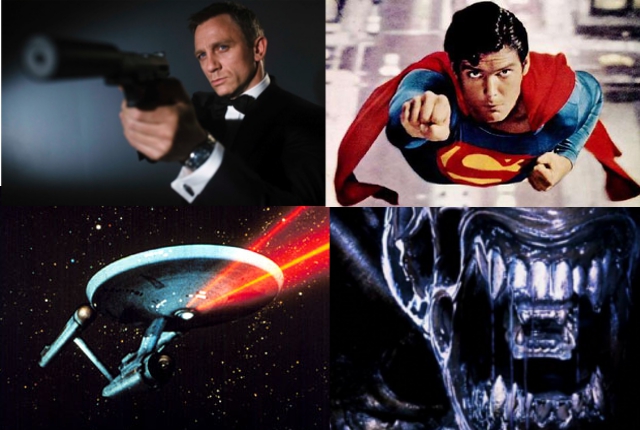
2012 is the year of the movie series.  Christopher Nolan’s The Dark Knight saga wraps up.  A new Spider-man series begins.  Marvel’s superheroes featured in their own movies for the last several years finally all come together in The Avengers, which is the sixth film in the series (seventh if you count Ang Lee’s Hulk as part of continuity).  We have the return of James Bond and the Men in Black while revisiting the universe of the Alien films.  Among these blockbusters are celebrated directors–the already mentioned Nolan, Joss Whedon, Barry Sonnenfeld, Sam Mendes, Mark Webb.

How much do you know about directors of major movie series?  Click the following  button and see if you can test your knowledge with the Movie Series Director Quiz:

Take the Movie Series Director Quiz!

After taking the quiz, scroll down to see more information about the questions (or cheat and skip the quiz altogether):

.

.

.

.

.

.

.

.

.

.

.

.

.

.

Last warning for spoilers!

.

.

.

.

.

.

.

.

.

.

.

.

.

.

1

David Fincher was a first-time feature film director when he was hired to make Alien 3.  Prior to that, he was an acclaimed music video director who worked with such musicians as Madonna, Billy Idol, the Rolling Stones, Paula Abdul, Aerosmith, and Nine Inch Nails.

Alien was Ridley Scott‘s second film.  His first was The Duelist, which he made after a long career making TV commercials.

James Cameron had directed two films before tackling AliensPirhanha 2: the Spawning and The Terminator.

Jean Pierre Jeunet was already a celebrated French director when he was hired for Alien Resurrection, responsible for such films with strong, unusual visuals as Amelie, Delicatessen, and City of Lost Children.

2

Richard Donner directed all four Lethal Weapon movies.  He also worked with Weapon star Mel Gibson in Maverick and Conspiracy Theory.  Donner famously directed Superman: the Movie, but was replaced on Superman 2 after shooting 2/3 of the movie.

3

Martin Campbell introduced both Pierce Brosnan and Daniel Craig as James Bond in Goldeneye and Casino Royale respectively.  Terrence Young directed the first Bond film, Dr. No with Sean Connery; Peter R. Hunt introduced the world to the quickly-forgotten George Lazenby in On Her Majesty’s Secret Service; Guy Hamilton gave Roger Moore a license to kill in Live and Let Die; and John Glen gave Timothy Dalton the 007 designation in The Living Daylights.

4

Joe Alves was the production designer on both Jaws and Jaws 2 before being promoted to director for Jaws 3.  Jeannot Szwarc directed Jaws 2 and Joseph Sargent had the misfortune of directing Jaws: the Revenge.

5

Richard Lester, who had previously worked with the Salkinds on The Three Musketeers and The Four Musketeers, was brought in to finish Superman 2 from the fired Richard Donner.  He ended up re-shooting a good portion of the movie in order to receive credit as the director.  Afterward, he directed Superman 3

6

John McTiernan directed both Die Hard and Die Hard with a Vengeance.  Renny Harlin did Die Hard 2 (with or without the subtitle Die Harder) and Len Wiseman directed Life Free or Die Hard.  The upcoming A Good Day to Die Hard is being directed by John Moore.

7

Tim Burton spent a good deal of time in pre-production on Superman Lives, which was to star Nicolas Cage as Supes from a script by Kevin Smith.  While Burton was in Pittsburgh scouting locations, Warner Bros. unceremoniously closed in L.A. production offices, and he only found out the film was cancelled when he returned to find the doors locked.

8

Mark Steven Johnson has the distinction of directing two films using Marvel characters that were ill-received by both critics and fans: Daredevil and Ghost Rider.  Neither were part of the same continuity as The Avengers.

Tim Story directed both of the Fantastic Four films (not counting the horrible and unreleased Roger Corman-produced version).

Pitof directed the DC Catwoman.

Rob Bowman directed the Daredevil spinoff Elektra.

9

J.J. Abrams’s Star Trek has made the most money of any Trek film, making $257,730,019 domestically.  Besides that film, the highest grossing entry in the series was Star Trek IV: The Voyage Home, making $109,713,132.  That was directed by Leonard Nimoy.

10

Quentin Tarrantino and John Landis were both asked to direct Men in Black, but turned the job down.  Miracle on 34th Street director Les Mayfield was considered–until the producers say Miracle on 34th Street.  Tim Burton was never considered.  Barry Sonnenfeld, thanks to his stylized The Addams Family, got the job and directed both sequels.

copyright © 2012 FilmVerse

25 Comments

5 Fantastic SF TV Shows Based on Movies

This article was originally published at showwatcher.com on May 16, 2012.

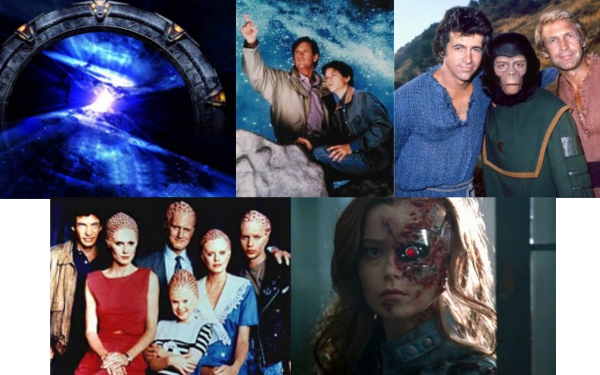
Television has had a long history of taking hit motion pictures and adapting them as television series.  Occasionally the TV shows are better than the movies they are based on or have more of an impact on the public consciousness.  While many comedies and dramas have successfully made the transition from the big to small screen, here are five science fiction movies that made very good television (sorry, Buffy the Vampire Slayer fans, that’s fantasy/horror, not science fiction).

StarGate SG1

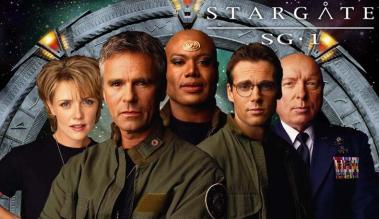
Before Roland Emmerich began destroying the world, he made the cool science fiction adventure Stargate, about a military team and a nerdy cartographer/linguist travel through some mysterious gate dug up in Egypt and find themselves on another planet fighting an ancient god that is really an alien.  While the movie was a fun escapist diversion, the most memorable thing about it was the potential it had.  It was a great concept that ultimately turned into a rally-around-the-flag battle with spaceships and explosions.  It only made sense that this story be continued and explored more in depth as a TV series.  Stargate SG-1 recast the roles and retooled them a bit (Colonel Jack O’Neill was no longer so suicidally sulky), arguably an improvement over the film.  Fans responded to the show, which lasted a whopping ten seasons, first on Showtime and then on Sci-Fi Channel.  It spawned two live action spin-offs, an animated sequel, and a couple of direct-to-video movies.  Second only to Star Trek, this series has made more impact on science fiction television than any other by telling intricate story arcs in a complex universe.

Terminator: The Sarah Connor Chronicles

It’s common for movies in a series to ignore previous installments, but Terminator: The Sarah Connor Chronicles is possibly the only TV series based on movies to selectively continue the story from one film but ignore its sequel.  In this case, the TV show is a direct sequel to Terminator 2: Judgement Day, but pretends that Terminator 3: Rise of the Machines never existed.  It picks up a few years after T2 with Sarah and her teenaged son John (AKA the future leader of the human resistance against the machines that want to wipe out all humanity) in hiding and once again being tracked by a time-traveling robot.  Through plot contrivances, they access the same time-displacement device that has made this entire story possible and go forward in time, thereby placing them in 2009 and avoiding either a continuity problem of changing the time period of the movies or being saddled with having to make a period piece.  This show was filled with terrific action and special effects, great acting (Lena Headey almost made us forget about Linda Hamilton, and Brian Austin Green was surprisingly effective as John’s uncle Derek Reese), and a serialized storyline that both honored James Cameron‘s films and expanded this universe into a thrilling and compelling production that had a life of its own.  Unfortunately, it only lasted two seasons and concluded with a twist that acted as either a huge cliffhanger or an indication that the previous plot had been resolved and left us to imagine how John’s situation would eventually lead him to become the rebel fighter in the future war.

Alien Nation

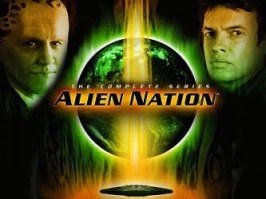
As with Stargate, the film Alien Nation had a great concept that wasn’t executed as well as the creators wanted.  In fact, the title was supposed to state the theme (alienation), but a typo wiped that out by separating it into two words.  Like the critically-hailed District 9, the story picked up years after an alien space craft crashed on Earth, leaving its inhabitants as unwelcome guests on our planet, though instead of CGI insects, we were given humans with prosthetics on their heads who integrated into our society as second-class citizens.  The main characters were a pair of human/alien cops played by James Caan and Mandy Patinkin solving a crime, so the themes of one race being subjugated by another was overshadowed by a standard police procedural with a duo of contrasting buddies much like what was satirized in The Last Action Hero.  The TV series took this concept and developed the themes of racism and other social issues, led by series creator Kenneth Johnson, who did similar things with The Incredible Hulk and V.  Gary Graham and Eric Pierpoint made the characters more relate-able with light banter and a true friendship that grew between the characters.  In addition to the social commentary, the lives and culture of the Newcomers are explored to a greater extent than the movie was able to do.  FOX cancelled the show after one season (at least they gave Sarah Connor slightly more air time), but produced five follow-up TV movies.

Planet of the Apes

Hollywood has gotten a lot of mileage from Pierre Boulle’s novel La Planète des Singes with five movies in the original film series and two reboots.  In 1974, the year after the fifth movie hit the theaters, CBS premiered a TV version of Planet of the Apes that sort-of followed up the original film.  Using sets and makeup from the films, the TV show was about a pair of astronauts who crash on Earth of the future, finding themselves in an era of taking apes who are in control.  They meet Zaius (now played by Booth Colman), who tells them that a previous astronaut arrived there ten years prior, which apparently was a reference to Charleton Heston‘s character from the first movie.  There are quite a number of discrepancies from the movies to the TV show (for instance, humans now talk and have a society rather than being wild animals), so the television version not quite a sequel (if it was, it would have set the precedence followed by Sarah Connor in ignoring movie sequels in favor of its own timeline of events).  Roddy McDowell plays his third ape character, Galen, a chimpanzee who is sympathetic to the plight of the lost astronauts trying to cope in this crazy world.  Only 14 episodes were produced that were later re-edited as TV movies.  While lacking the social themes of most of the feature films, the TV series was still a rousing adventure and is a must for Apes fans.  This show was followed up by a very good animated series Return to the Planet of the Apes that showed the apes living in a modern civilization

Starman

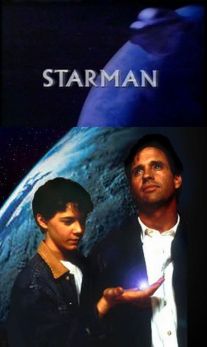
The guy from Airplane! taking over the role that earned Jeff Bridges an Academy Award nomination?  How much wronger can a TV adaptation go?  Actually, the television series Starman got a lot of things right.  Instead of being a remake like most series based on movies, it was a direct sequel to the John Carpenter film that told the story of an alien stranded on Earth who takes the form of a dead man and teams with his widow to get back to his people; in the course of the film, the two fall in love despite being of different species.  The series picks up 15 years later (getting trapped in the paradox that Sarah Connor avoided by having to shift the time frame of the movie from 1984 to 1971, creating more continuity problems) with Starman returning to Earth and assuming the form of a recently-killed photographer played by Robert Hays.  His beloved Jenny (why are the loves of protagonists always named Jenny?) is missing and her teenage son (Christopher Daniel Barnes) is in foster care.  Starman and his son go on the road searching for Jenny, staying one step ahead of a government agent.  Despite sounding like an alien version of The Incredible Hulk, this show found its own voice, mostly in the touching father-son relationship as the boy teaches his father what it means to be human while learning of his own alien powers.  The show ran for one season, and the producers had enough foresight to see that cancellation was imminent, so they provided a two-part resolution to their journey (oddly followed by one more episode) when they finally find Jenny.  There are some nice flashbacks to the movie, though remade with Erin Gray, who took over the role from Karen Allen.

© 2012 Jamie Helton

16 Comments

Actor Teams We Need to See

Chemistry between actors on screen is an elusive thing.  When it works, the teaming of actors transcends sometimes mediocre movies (exactly how many road movies did Bob Hope and Bing Crosby do together?) and can elevate good films to greatness (imagine Ghostbusters without any of the cast members intact).  Bad chemistry can be painful to watch (who’s bright idea was it to put Dan Ackroyd and Rosie O’Donnell together–and in bondage, no less?).  Sometimes pairing up two actors is obvious, especially if they’re friends off screen (John Belushi and Dan Ackroyd, David Spade and Chris Farley, Cheech & Chong) and other times brilliant teaming is serendipitous (John Travolta and Samuel L. Jackson in Pulp Fiction, Dan Ackroyd and Eddie Murphy in Trading Places, Tom Hanks and Meg Ryan in about 40 films).

We often look forward to movies when an unusual or interesting pairing takes place.  Fanboys everywhere were excited when Indiana Jones (Harrison Ford) and James Bond (Daniel Craig) teamed up for the first time in Cowboys & Aliens (apparently forgetting that the original Bond, Sean Connery, played Indy’s dad in The Last Crusade).  The upcoming That’s My Boy has Andy Samberg playing Adam Sandler’s son, which is a perfectly obvious casting choice (too bad the film looks terrible).  Also coming up is the Wes Anderson film Moonrise Kingdom, which for the first time features Bruce Willis and Bill Murray.  Willis has become an onscreen tough guy, but when he first began his acting career, he was known for his sarcastic and very Murray-ish wit.  In Moonlighting, it almost seemed as if Willis was channeling Murray.  It may end up that they have no screen time together, and if that’s true, someone needs to put them in a film actually acting off each other.

Here are ten other pairs of actors that need to be teamed up in a film, in no particular order:

Eddie Murphy and Chris Rock

There have been countless teamings of former Saturday Night Live members (as was illustrated in the opening paragraphs), but for some reason Murphy and Rock have never headlined a movie together, which is strange given the fact that Rock was somewhat of a prodigy of Murphy’s.  Granted, Rock did a walk-on in Beverly Hills Cop II, a voice of one of the animals in Doctor Doolittle, and a small role in Boomerang, but he has never been treated as a peer to Murphy.  With the older comic’s star somewhat tarnished these days, it would be great to see him back on top form (Tower Heist was an indication that he still has it, despite A Thousand Words).  Teaming him with Rock–with an actual funny script–would be an audience draw.  Or maybe Murphy’s Donkey and Rock’s Marty the zebra can just hang out some time.  (Just keep Chris Tucker far, far away.)

Johnny Depp and Michael Keaton

Both Depp and Keaton have worked repeatedly with Tim Burton, and arguably became as well known as they are due to their roles in Burton’s films.  However, they have yet to actually be in a movie together (Keaton’s last collaboration with the director was 1992’s Batman Returns).  While it would be great for Keaton to be cast in another Burton movie, what would it be like for these two actors to pair up in a movie with a different director so they would be out of the influence of Goth weirdness?

Meryl Streep and Kate Winslet

Streep is considered the best actress alive today (perhaps of all time).  Winslet is arguably the best actress of her generation.  Winslet is obviously in competition with Streep for Oscars, having won one with five additional nominations compared to Streep’s three wins and fourteen noms (okay, so she has a way to go to catch up, but she’s still young).  How about putting these two powerhouse women together in one movie and just let them go.  Throw in Judy Densch for good measure.

Robert Downey, Jr. and Benedict Cumberbatch

Both actors currently perform Sherlock Holmes, Downey on the big screen and Cumberbatch on TV.  Both are highly successful at bringing their unique interpretation to the role and are iconic in their own ways.  They can project intelligence and strength of character, as well as human frailty.  It would be fascinating to see what these two actors could do when facing off against one another.

Rooney Mara and Noomi Rapace

Both of these oddly-named actresses played the role of Lisbeth Salander in The Girl with the Dragon Tattoo, Rapace in the original Danish production that was an international sensation and Mara in David Fincher’s American remake, earning her an Oscar nomination.  Rapace will next be seen in Ridley Scott’s Prometheus.  Both are highly acclaimed for their interpretations of Lisbeth, but what could they do if they were onscreen together?

Alan Alda and Donald Sutherland

Alda came to fame by playing Hawkeye Pierce in the TV version of M*A*S*H, but after the series ended he made a career out of playing mostly villainous characters.  Sutherland originated the role in Robert Altman’s film and stayed busy for decades playing mostly villainous characters.  The two actors are nothing alike in personality, but both have strong screen presence.  Put them together, preferably in a political thriller, and see what sparks can be generated.

Donald Sutherland and Keifer Sutherland

Speaking of Donald Sutherland, when is he going to do a movie with his son Keifer?  Sure, they were both in A Time to Kill, but they had no scenes together (Keifer also had a brief role in Max Dugan Returns, featured Donald in a larger one).  The producers of 24 missed a great opportunity when they had Jack Bauer’s father played by James Cromwell instead of Keifer’s own father.  It’s been said that the two don’t get along well, but what better opportunity to heal broken family ties?  At the very least, any onscreen tensions would be real.

Update 12/22/12: The two are reportedly going to star together in an untitled western.

Will Smith and Samuel L. Jackson

This one is so obvious it’s almost painful.  Smith once dominated the Fourth of July with his blockbuster science fiction comedies and/or epics and has proved to be a fine dramatic actor as well.  Jackson can do anything–including bossing around a group of cranky superheroes.  It’s only inevitable (and surprising it hasn’t happened yet) that these two powerhouse actors be in a movie together.  Here’s a thought–if they ever get around to doing Hancock 2, Jackson can play the title character’s father!  After all, he already knows a thing or two about superheroes.

Natalie Portman and Kiera Knightly

Quick!  Someone cast Portman and Knightly as sisters (possibly even twins).  Knightly already played Portman’s double in Star Wars: Episode 1 – The Phantom Menace, so isn’t it about time that the two actresses actually be on the same level?  Portman could even don period clothing to join Knightley in one of her costume pieces.  Extra points if Winona Ryder is also cast (she shared the screen with Portman in Black Swan).

Jim Carrey and Robin Williams

Would the screen explode if the manic comedic stylings of Carrey and Williams were brought together in one movie?  Perhaps that’s why neither have ever worked together.  Imagine the chaos on the set if these two were allowed to cut loose with their ad libs.  Usually, each of them need a “straight man” (or an entire cast filled with them) in order to bounce their insanity off of, so is it even possible for them to share the screen?  Would they one-up each other in the camera mugging?  Here’s an idea–put them in a drama where neither can do their usual schtick.  Both usually give better performances when restrained anyway.  Give someone else the crazy character, say Robert Di Niro.

© 2012 FilmVerse

10 Comments

Oscar Quiz: John Williams

………………..

This article was originally published at showwatcher.com on May 1, 2012.

John Williams is one of the most prolific film composers of all time and is responsible for some of the most memorable movie music for such films as JawsStar WarsClose Encounters of the Third Kind, Superman, the Indiana Jones films, E.T., Jurassic ParkSchindler’s List, and Harry Potter.  He provided scores for musicals such as Fiddler on the Roof, Tom Sawyer, and Yes, Giorgio and worked with lyricists on songs featured in non-musical movies.  He is the second-most Oscar-nominated person in Academy Awards history, following Walt Disney.  He even acted as orchestrator and musical director for the Oscar telecasts in 1976 and 2002.

His music has a wider reach than just in movies.  As “Johnny Williams,” he scored a number of television shows early in his career such as Gilligan’s Island, Lost in Space, Time Tunnel, and Land of the Giants before moving on to feature film history.  From 1980 to 1993, Williams served as Principal Conductor for the Boston Pops Orchestra and is currently the Laureate Conductor of the Pops.  He also has a long association with the London Symphony Orchestra, which he has used repeatedly for his film scores.  He has composed themes for both NBC News and the Olympics.

How much do you know about John Williams and his Oscars?  Click the button below and see if you can pass the quiz:

Take the John Williams Oscar Quiz!

After taking the quiz, scroll down to see more information about the questions (or cheat and skip the quiz altogether):

.

.

.

.

.

.

.

.

.

.

.

.

.

.

Last warning for spoilers!

.

.

.

.

.

.

.

.

.

.

.

.

.

.

1

John Williams earned Academy Award nominations in 6 decades: 1960s, 1970s, 1980s, 1990s, 2000s, and 2010s.

2

He had multiple Oscar nominations 14 times in the years 1970, 1973, 1974, 1978, 1983, 1985, 1988, 1990, 1991, 1992, 1996, 2002, 2006, and 2012.

3

He received a total of 47 Oscar nominations.

4

He won 5 of the Best Score nominations for the following movies:

  • Fiddler on the Roof – 1972*
  • Jaws – 1976
  • Star Wars – 1978
  • E.T. the Extraterrestrial – 1983
  • Schindler’s List – 1994

5

Five of his nominations were for Best Song; 42 for Best Score (or variations of that, since the name changed over the years).  His Best Song nominations were for the following movies:

6

None of his Best Song nominations won.

7

Of his many films with long-time collaborator Steven Spielberg, 15 of them were nominated for Best Score (plus one Best Song nomination for Hook).

As a bit of trivia, only one feature film directed by Spielberg (not counting Duel, which was first released as a TV movie) was not scored by John Williams: The Color Purple.  Producer Quincy Jones composed the music instead.

8

While Spielberg is responsible for most of the films John Williams was nominated for, he had collaborations with three other directors that resulted in multiple nominations:

Mark Rydell

Oliver Stone

Chris Columbus

9

Three of the Star Wars films earned Oscar nominations for John Williams’ scores: Star Wars (1978), The Empire Strikes Back (1981), and Return of the Jedi (1984).

10

Three of the Indiana Jones movies were nominated for Ocars for his music: Raiders of the Lost Ark (1982), Indiana Jones and the Temple of Doom (1985), and Indiana Jones and the Last Crusade (1990)

* Dates are the year of the Oscar presentation, not year the movie was released.

Information came from IMDb and Wikipedia.

© 2012 Jamie Helton